
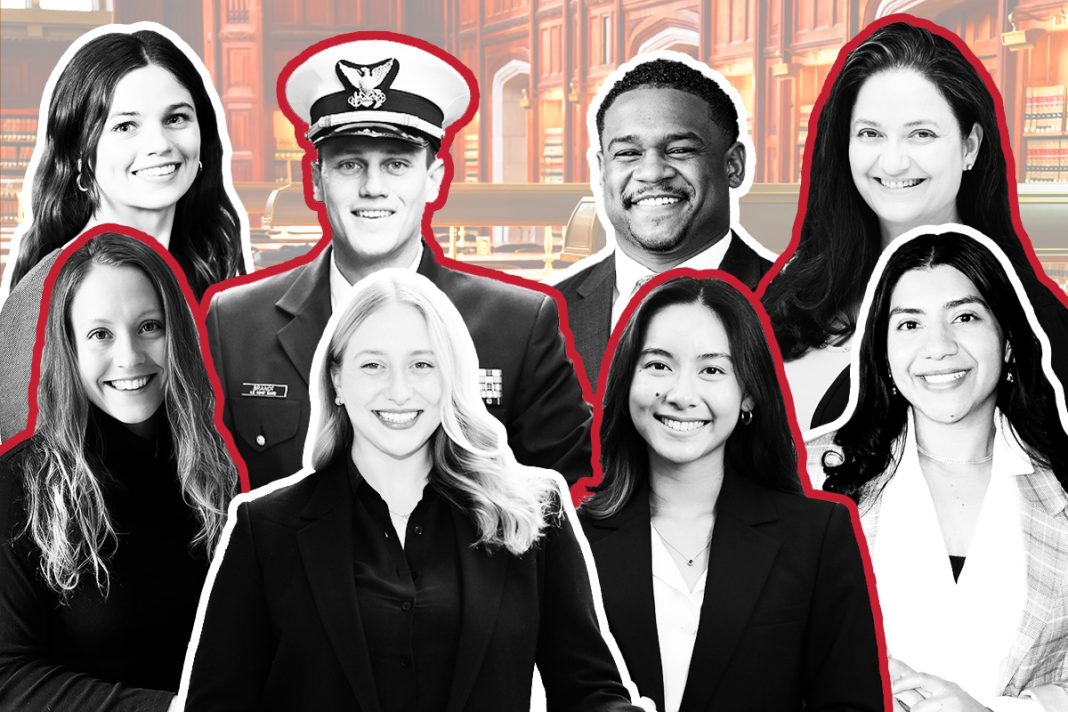
Across the country, law students are finding new ways to serve, lead and challenge what legal education can be. They’re advocates, builders and changemakers — using their time in law school not just to prepare for practice, but to make a difference now.
Each year, The National Jurist honors students whose work embodies that spirit. This year’s honorees represent the best of what law schools strive to cultivate: creativity, courage and a commitment to justice that extends far beyond the classroom.
Their stories are as diverse as the communities they serve. One helped pass legislation expanding protections for sexual assault survivors and built support systems for first-generation students. Another designed digital tools that help veterans and military families navigate complex benefit systems. Others founded student organizations, developed programs addressing climate migration or brought Indigenous law to the forefront of campus dialogue.
Together, they remind us that the next generation of lawyers is already shaping the profession — proving that leadership begins the moment a law student decides to use their skills to make someone else’s life better.
Tabitha Pitzer, American University Washington College of Law
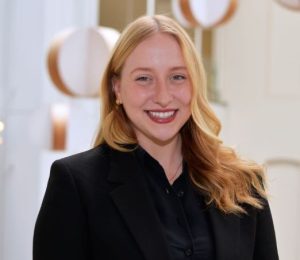
When Tabitha Pitzer stepped off the plane from South Africa with her parents, ten suitcases and $700, she couldn’t have imagined she’d one day testify before a state legislature. But every chapter of her life since — from navigating housing insecurity to building programs that change lives — has been guided by the same conviction: to turn gratitude into action.
Pitzer grew up in Oregon as a first-generation American and first-generation student. Her early experiences shaped her understanding of opportunity and fueled a lifelong drive to expand access for others. As a student advocate at Oregon State University, she helped pass Senate Bill 762, granting legal amnesty to sexual assault survivors who report incidents while under the influence — a change that’s protected countless students since. She co-created Oregon’s Office of Open Education Resources, securing $1.3 million in grants to make college textbooks free, and later helped establish the Dreaming Beyond Borders Center, a resource hub for undocumented and mixed-status students and families.
That same vision for equity continues to define her work at American University Washington College of Law. As president of ADVANCE, the school’s first-generation student organization, Pitzer built a network that provides mentorship, peer support and professional development for students who are the first in their families to enter the legal field. Her peers describe her as “boundless in energy and generosity,” the kind of person who lifts everyone around her.
In March 2025, she carried her advocacy to the Maryland State Legislature, testifying in favor of House Bill 0298, which would require higher education institutions to collect data on student parents. Inspired by a single-mother classmate, Pitzer’s testimony captured her broader philosophy: “When populations are invisible, their challenges remain unseen.”
Her legal experience has been equally purposeful. At the U.S. Department of Veterans Affairs, she worked in the Office of General Counsel to ensure government contracts were fulfilled ethically and effectively — continuing her long-standing commitment to veterans that began years earlier when she co-led Oregon’s Veterans Task Force and organized the Portland Veterans Day Parade. After a federal hiring freeze disrupted her plan to work for the Food and Drug Administration, she pivoted to Peckar & Abramson, where she handled construction and commercial litigation cases while continuing pro bono service for marginalized communities.
In recognition of her commitment to justice and service, Tabitha was named one of the honorees for the 2024 Peter M. Cicchino Award for Outstanding Advocacy in Public Interest — one of the law school’s highest distinctions.
Amelia Dal Pra, University of California, Berkeley, School of Law
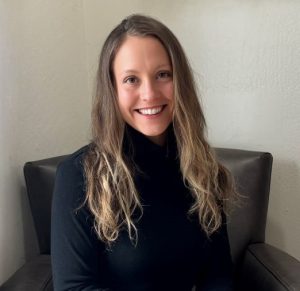
Growing up in a small Midwestern town, Amelia Dal Pra always saw advocacy as something personal. At eight years old, she became a vegetarian out of concern for animal welfare. By her twenties, she was working on Capitol Hill, advancing refugee and climate policy and serving as a Fulbright Scholar in Malaysia. Those experiences revealed both the power and limits of policy work — and led her to law school with a mission to bridge the gap between law, climate change and human rights.
When she arrived at Berkeley Law, Dal Pra noticed something missing: There was no coordinated effort addressing the legal needs of people displaced by climate change. Rather than wait for one to form, she built it. She founded the Climate Migration and Displacement Project (CMDP), a student-run pro bono initiative that connects more than two dozen law students with clients such as Our Children’s Trust, the State of California and Central California Legal Services. Under her direction, CMDP produces litigation strategies, policy analysis and resources for climate-displaced and migrant communities — an effort that has drawn attention from practitioners and policymakers alike.
Dal Pra’s approach is hands-on. When the bipartisan Afghan Adjustment Act stalled in Congress after the fall of Kabul, she volunteered at a Special Immigrant Visa clinic on a Virginia military base, where she saw how legal representation could immediately change lives. That experience shaped her view of law as a tool for both justice and empathy — one that reaches individuals as powerfully as it shapes systems.
At Berkeley, she has deepened that commitment through service and scholarship. She has worked with the California Asylum Representation Clinic, serving asylum seekers and later co-leading the clinic as a 2L. She sits on the board of the Animal Legal Defense Fund and is a member of the Ecology Law Quarterly. She serves on the editorial board for the California Law Review. Through the Ninth Circuit Practicum, she is preparing to brief and argue a pro bono case before the U.S. Court of Appeals.
After graduation, Dal Pra will clerk for Justice Lidia Stiglich of the Nevada Supreme Court. Her mentor, Deborah Schlosberg, director of Berkeley Law’s Pro Bono Program, describes her as “unstoppable… the kind of student who hears about a legal need and raises her hand.”
Julianna Montano, Southwestern Law School

In an era when artificial intelligence is reshaping every corner of society, Julianna Montano is helping the legal profession find its moral compass. A student in Southwestern Law School’s two-year accelerated SCALE program, she has made it her mission to ensure that conversations about technology include ethics, accessibility and human impact.
Montano didn’t wait for a seat at the table — she built one. In 2024, she designed and led Southwestern’s first Professional Development Boot Camp for Technology Law, a three-part series that gave law students practical guidance on navigating emerging careers in privacy, AI and data governance. She developed the curriculum herself, ran the sessions independently and created a model that other institutions can now replicate.
As president of Students for Technology, Law and Entrepreneurship, she transformed the group into a hub for exploring the intersection of law, science and innovation. Under her leadership, students engaged with practitioners on topics ranging from AI ethics to biotechnology regulation — turning a student club into a collaborative learning community.
Her influence extends far beyond campus. As a Responsible AI Ambassador with AI LA, Montano helps public audiences understand the social and ethical implications of artificial intelligence.
As a summer associate at Nelson Mullins Riley & Scarborough LLP, she handled class-action defense and data privacy matters, earning praise for her ability to translate complex technical issues into persuasive advocacy. After the bar exam, she’ll return to the firm as an associate.
Jasmin Divas Villeda, California Western School of Law

When Jasmin Divas Villeda began her first semester of law school, she was in a wheelchair and on heavy pain medication after a motorcycle accident. But giving up was never an option. An immigrant from El Salvador who came to the United States at age five, she has spent her law school years turning hardship into leadership — building programs, organizations and opportunities for others to follow.
A proud first-generation law student and a member of the Nahuat Salvadorian community, Villeda has become a driving force for inclusion at California Western. She founded the Indigenous Peoples Law Student Association, the first of its kind at the school, and now serves as its president. Working closely with faculty and staff, she helped establish California Western’s first formal land acknowledgment, creating a permanent statement of respect for Indigenous communities. She also serves as vice president of the International Law Student Association, helping to connect students from around the world through advocacy and cultural understanding.
Villeda’s passion for oral advocacy has defined her law school experience. She competed in the Philip C. Jessup International Law Moot Court Competition, where her team earned honors for both top oralist and best brief. Drawing on that success, she went on to co-found California Western’s first National Native American Law Students Association Moot Court Team.
As a Diversity Fellow and legal intern at Wilson Turner Kosmo LLP, she assists with business, employment and warranty disputes, and she has interned with both the San Diego Superior Court and the ABA Immigration Justice Project. Her commitment to pro bono service earned her induction into California Western’s Pro Bono Honors Society.
Jack Brandt, Suffolk University Law School

Aboard a 154-foot Coast Guard cutter in the Arabian Gulf, Jack Brandt helped plan missions to disrupt smuggling networks that funded extremism — often under the watchful eye of Iranian patrol vessels. Today, the Suffolk University Law School third-year is intercepting a different kind of threat: the bureaucratic and technological barriers that keep veterans from accessing the benefits and legal help they’ve earned.
Brandt’s path to law began with service. As operations officer on a fast-response cutter, he managed missions across the Gulf of Oman and Strait of Hormuz. But his additional duty as education services officer proved just as transformative. After realizing he’d mistakenly paid full tuition for graduate courses he could have covered with military education benefits, Brandt helped 19 of his 27 crewmates avoid the same fate. That experience — and the impact of clear, practical guidance — sparked a new mission.
At Suffolk Law, Brandt became a technologist as well as an advocate. With no prior coding experience, he learned Python in the Legal Innovation and Technology Clinic and helped prototype a smart form that assists self-represented litigants filing appellate briefs. From there, he began building digital tools that serve the military community directly.
He created the Military Benefits Assistant, an online platform that connects veterans and families to personalized benefit information in plain language. The site has already helped more than 1,300 users find resources faster and with less confusion. He later built the CGMA Program Finder, which matches Coast Guard families in crisis to emergency aid programs, and the Coast Guard Ethics Request System, which standardized a once-fragmented approval process across several states.
Beyond his technology projects, Brandt’s service extends throughout Suffolk Law. He serves on the Student Veterans Association executive board, volunteers with Veterans Legal Services and assists first-year students as a Legal Practice Skills teaching assistant.
He will spend his final semester as a New York Pro Bono Scholar, working full time at Veterans Legal Services to support low-income veterans across Massachusetts. After graduation, Brandt will continue serving as a JAG officer in the U.S. Coast Guard, where he plans to expand the Military Benefits Assistant to include federal, state, tribal and nonprofit resources.
Danielle Basdekis, University of Maryland Francis King Carey School of Law
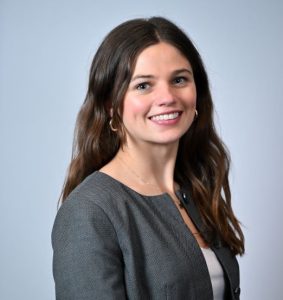
At University of Maryland Francis King Carey School of Law, Danielle Basdekis has built a legacy of action through service. As president of the Student Bar Association, she launched new initiatives that strengthened community and prioritized giving back. Her hallmark project, the Thurgood Marshall Week of Service, united student groups across campus to support women’s shelters, youth programs and public interest grants — turning volunteerism into a shared value.
Basdekis also reshaped how the school supports public interest law. As president of the Maryland Public Interest Law Project (MPILP), she led the organization’s Goods and Services Auction, raising more than $24,000 in summer grants for students working in nonprofit and public service roles. Her leadership helped expand opportunities for peers committed to social justice and community impact.
Her advocacy extends beyond campus. At FreeState Justice, she advanced legal services for low-income LGBTQ+ Marylanders, researching name-change law, employment discrimination and healthcare access. She later joined Baltimore City Public Schools’ Office of Legal Counsel, assisting with education, labor and civil rights issues while supporting equity and Title IX initiatives.
A Rose Zetzer Fellow and member of the Maryland Law Review, Basdekis continues to integrate leadership, scholarship and service. After graduation, she will clerk for Justice Angela M. Eaves on the Supreme Court of Maryland.
Honorable Mentions
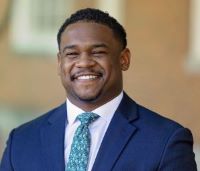
Tristan Gardner
Samford University Cumberland School of Law
Tristan Gardner has built a legacy of advocacy and inclusion at Samford University, Cumberland School of Law. As president of the Student Bar Association, he spearheaded initiatives to strengthen student engagement and elevate underrepresented voices. He also helped expand the annual Thurgood Marshall Symposium through his leadership in the Black Law Students Association, transforming it into a platform for dialogue on race, equity and reform. Beyond campus, Gardner has advanced civil rights and criminal justice reform through hands-on work with the Legal Defense Fund, the Equal Justice Initiative and Volunteer Lawyers Birmingham.

Jennifer Koepke Moller
Santa Clara University School of Law
At Santa Clara University School of Law, Jennifer Koepke Moller has built programs that strengthen connection and belonging among students. As president of the Affirmed Law Student Association, she launched an accountability-buddy program and peer support office hours that have become vital spaces for nontraditional and returning law students. Her leadership also extends to academics and service. Moller serves as editor-in-chief of the Journal of International Law and notes editor for the Santa Clara Law Review, guiding publication strategy and mentoring peers.
