
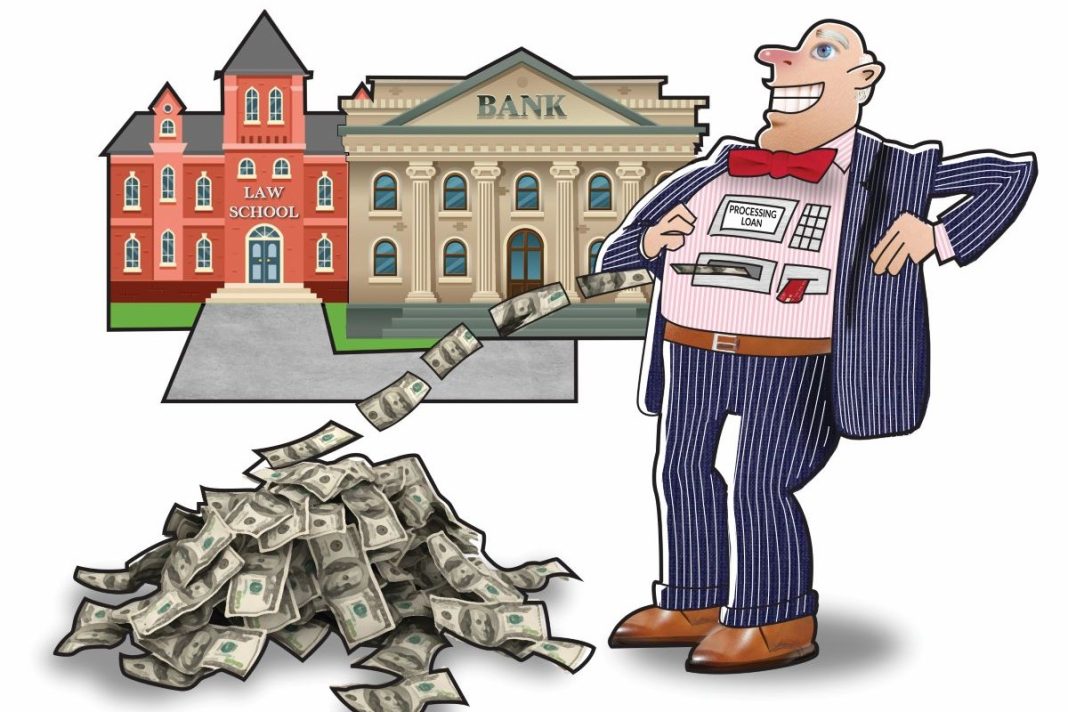
For years, there was an assumption that if you were admitted to law school, federal loans would cover the cost. That assumption is changing.
New federal regulations in the One Big Beautiful Bill Act are reshaping how to finance a J.D., placing firm caps on annual borrowing and eliminating Grad PLUS loans for new borrowers.
Moving forward, paying for legal education will require earlier planning, stronger credit awareness and a deeper commitment to financial wellness.
The shift may sound intimidating, but it also presents an opportunity. If you approach law school financing with strategy, financial literacy and a long-term wellness mindset, this can reduce stress, protect future career choices and build a more stable foundation for life after graduation.
In a profession built on careful analysis and disciplined thinking, developing financial wellness before the first day of class may be one of the smartest moves you can make.
And there’s more good news: Law schools, nonprofit organizations and even states are stepping up with new strategies.
The end of unlimited federal borrowing
Dean Terence Lau of Syracuse University College of Law calls the shift historic.
“The OBBA represents the most significant change to graduate student financial aid in decades,” Dean Lau said.
Beginning July 1 for new borrowers, Grad PLUS loans will no longer be available. Law students will instead rely on Federal Direct Unsubsidized loans capped at $50,000 per year, with a $200,000 lifetime limit.
That creates a gap.
“The average total cost of attendance at a private law school often exceeds $75,000 to $90,000 per year,” Lau said. “That means many students will face an annual funding gap of $25,000 to $40,000 or more that federal loans will no longer cover.”
J.D. programs remain classified as professional degrees, allowing them access to the higher cap rather than the lower limit applied to other graduate programs. But part-time students face proration. A half-time enrollee may borrow only $25,000 per year.
For students interested in public service, there is stability and change. Public Service Loan Forgiveness remains intact and payments under the new Repayment Assistance Plan count toward forgiveness. Still, Lau said that the new plan “generally requires higher monthly payments than the plans it replaces.”
Private loans, he said, do not qualify for Public Service Loan Forgiveness.
Private loans, credit reality
With federal caps in place, many students will need private loans to close the gap. That brings creditworthiness to the forefront.

“Private loans may become a more common part of the law school financing landscape,” said Teria Thornton, director of prelaw and diversity initiatives at AccessLex Institute. “As a result, it’s critical for students to do their homework when comparing lenders, understanding terms and evaluating long-term repayment implications.”
Interest rates, borrower protections, cosigner requirements and repayment flexibility vary significantly. Students without strong credit histories may face higher rates or need a cosigner.
Thornton encourages students to begin preparing now by establishing strong habits which will reduce stress later and create a foundation for long-term stability.
That preparation includes building or improving a credit score, paying bills on time, keeping credit balances low and reviewing credit reports for errors well before enrolling.
Dean Lau echoes that advice.
“If you’ll need private loans, your credit score and history will directly affect the rates you’re offered,” he said. “Students with thin credit files should start building credit responsibly well before law school.”
Institutional models offer alternatives
Not all law schools are equally exposed to the new caps.
At Brigham Young University – J. Reuben Clark Law School, affordability has long been part of the model.
David Moore, dean of BYU Law, said with the generous support of its sponsoring institution, The Church of Jesus Christ of Latter-day Saints, BYU Law offers the lowest tuition of any private law school in the nation.

“Approximately half the student body receives at least a full tuition scholarship, and every student receives a scholarship,” Dean Moore said. “More than half of the Class of 2025 graduated debt free.”
For students who did borrow, Dean Moore said the average amount financed was under $50,000, below the upcoming federal cap.
“With great affordability, BYU Law grads simply have more flexibility in terms of life decisions,” he said.
At The University of Kansas School of Law, leaders launched a new internal lending initiative in response to the change.
The Jayhawk Endowment Law Program for Students, or J-HELPS, provides eligible full-time students with access to loans with a fixed 5% interest rate and flexible repayment terms. The program is funded by KU Endowment, a nonprofit founded to support the university and its students.
“While most of our students won’t need to utilize the program, for those who do, these loans allow them to continue their legal education without the hassle and expense of private bank financing,” said Steven Freedman, associate dean of admissions at KU School of Law.
Last academic year, 97% of KU School of Law students borrowed less than $50,000 for tuition and living expenses and more than 80% received scholarships.
Such institutional programs may become increasingly important as schools seek to preserve access.
The new prelaw checklist
In this new environment, financial literacy is not optional.
Dean Lau advises students to calculate their likely funding gap by comparing each school’s total cost of attendance against the $50,000 cap and expected scholarships. He urges early application to maximize institutional aid and encourages careful evaluation of employment outcomes and bar passage rates.
Thornton adds that students should develop a financial plan that includes projected borrowing and a repayment strategy. They should research external scholarships, compare cost of living across cities, understand loan terminology such as interest capitalization, origination fees and variable versus fixed rates and ask for clarity in the terms from lending experts.
“Evaluate schools beyond prestige,” Thornton said. “Rank schools not just by reputation, but by financial fit, career outcomes, mission alignment and student support systems.”
A more intentional era
The federal government’s message in imposing caps is clear: Graduate education has grown expensive and borrowing should have limits.
For you, the prelaw student, that means the bank processing your loan and bridging the funding gap is not automatic. It requires intention. It requires credit strength. It requires asking difficult questions about cost and career trajectory.
But it also reveals something encouraging. Law schools are innovating. Nonprofits are educating. And you have the opportunity to become more financially savvy.
Thornton said the J.D. remains within reach; the path simply demands more planning than before.
“Remember that your journey is your own,” Thornton said. “There is no single right path to law school.”
Financial Readiness Checklist
Law school financing has entered a new era. Before you submit your deposit, make sure to check the following:
□ Calculate your funding gap
Compare each school’s full cost of attendance, including tuition, fees, housing, food, transportation, books, health insurance and personal expenses, against the $50,000 annual federal loan cap and your projected scholarships. Know the shortfall before you enroll.
□ Apply early for scholarships
Early applicants are more likely to receive stronger scholarship packages. Waiting until late in the admissions cycle can mean fewer institutional dollars and a larger borrowing gap.
□ Build and review your credit
Your credit profile directly affects interest rates and eligibility.
- Check your credit report 12 to 18 months before enrollment.
- Pay bills on time.
- Keep credit card balances low.
- Correct any reporting errors.
□ Understand federal vs. private loans and terminology
Federal loans offer income-based repayment options and eligibility for Public Service Loan Forgiveness. Private loans do not. Learn key terms such as fixed vs. variable rates, origination fees, interest capitalization and cosigner requirements before signing.
□ Research school loan programs
Some institutions offer internal lending programs with fixed rates and flexible terms designed to reduce reliance on private banks. Ask each financial aid office what safeguards or institutional options they provide.
□ Explore external scholarships
Do not rely solely on school aid. Search for outside scholarships and writing competitions that can reduce your borrowing needs.
□ Compare cost of living by location
Housing costs vary dramatically depending on city and region. A lower tuition school in a high-cost city may ultimately be more expensive than a higher tuition school in a more affordable market.
□ Plan for repayment
Project your likely starting salary in your intended practice area. Calculate what your monthly payment could look like under federal repayment plans. If you are considering public interest law, prioritize minimizing private loan debt.
□ Consider program format carefully
If enrolling part-time or in a hybrid format, understand that federal loan eligibility may be prorated. Do the math on how reduced enrollment affects annual borrowing limits.
□ Develop a financial wellness plan
Create a realistic post-graduation budget. Evaluate schools based on financial fit, employment outcomes, bar passage rates and long-term return on investment.
Bottom line: Admission is only step one. Financial readiness is what protects your flexibility, career choices and peace of mind after you earn the J.D.
Read about AccessLex’s private loan exchange to help students compare lending options. The directory contains contact information for each private and state-based lender in the exchange and details such as eligibility, fees and repayment terms. Check AccessLex’s exchange directory often for the most current listings.
