
Law school buildings have long been judged by their architecture, natural light and the impression they make on prospective students. Those qualities still matter, but the newest Best Law School Buildings Honor Roll shows a clear shift. Today’s standout facilities are defined less by how they look and more by how well they support the way students learn, work and live.
Across this year’s Honor Roll, the strongest buildings are designed around access and flexibility. Many offer extended or around-the-clock library hours, abundant study space and classrooms equipped for recording, streaming and hybrid participation.
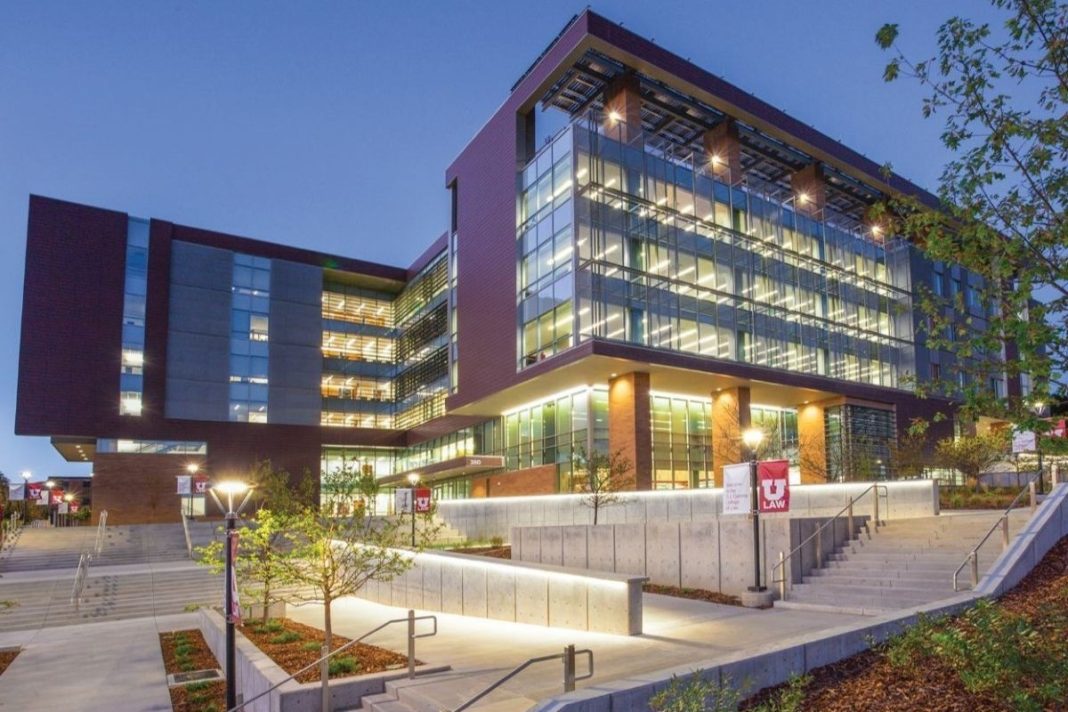
University of Utah’s S.J. Quinney College of Law, this year’s top-ranked school, reflects that balance. Along with generous space and modern learning technology, the building combines sustainability features such as a greywater reuse system and rooftop solar generation with student-centered amenities that support daily life.
At the same time, buildings are increasingly designed as training grounds for practice.
Northern Kentucky University’s Salmon P. Chase College of Law recently opened a new advocacy courtroom and student center that mirror real courtroom settings and expand collaboration space.

At The University of Memphis – Cecil C. Humphreys School of Law, a historic federal courtroom remains in active use by local, state and federal courts, giving students exposure to live proceedings in the heart of the downtown legal district.
Sustainability has moved from a bonus feature to a defining characteristic. LEED certifications, energy recovery systems, green roofs and water conservation strategies are now common among top performers, reflecting a long-term focus on efficiency and environmental impact.
Together, this year’s Honor Roll reflects a broader evolution. The top-ranked school illustrates how these priorities come together in a single facility.
Best law school buildings
Click on a column with an arrow to sort by that column and click again to sort in reverse. You may also search the table, page through the results, and set how many items to show at a time.
University of Utah claims the top spot thanks to a combination of scale and access. With 24/7 library availability and some of the highest square footage per student in the rankings, the building is designed around how law students actually study and collaborate. Strong design, modern technology and a wide range of study environments helped Utah earn the highest overall score.
At University of Utah, the law school building was designed to perform as well as it looks. It earned LEED Platinum status and incorporates a range of systems that reduce energy and water use while creating a bright, comfortable learning environment. A greywater reuse system saves more than 130,000 gallons of water each year, while regenerative elevators capture excess energy and feed it back into the building. A well water cooling system supports the chilled beam climate system, and a translucent photovoltaic roof generates power while providing shade. A green roof terrace and native landscaping collect rainwater for irrigation, and a skylit central atrium brings natural light deep into the building, reducing the need for artificial lighting.
The facility is equally focused on student life. Recreational and wellness amenities include a fitness center with yoga classes, cardio equipment and showers, along with outdoor basketball and pickleball courts, secure bike storage and a meditation room. Student kitchenettes on most floors, a locally owned café and a dedicated student activity center create spaces for community throughout the day.
Academic and professional needs are integrated into the design, with advanced classroom technology, reservable study rooms and dedicated space for the law review.
Located adjacent to a light rail station, University of Utah provides easy transit access across the Salt Lake City region. Together, its sustainability performance, wellness amenities and student-centered design reflect a facility built for both long-term impact and daily use — and help explain why it rose to the top of this year’s rankings.
Another example of the shift toward practice-focused space can be found at NKU Chase.
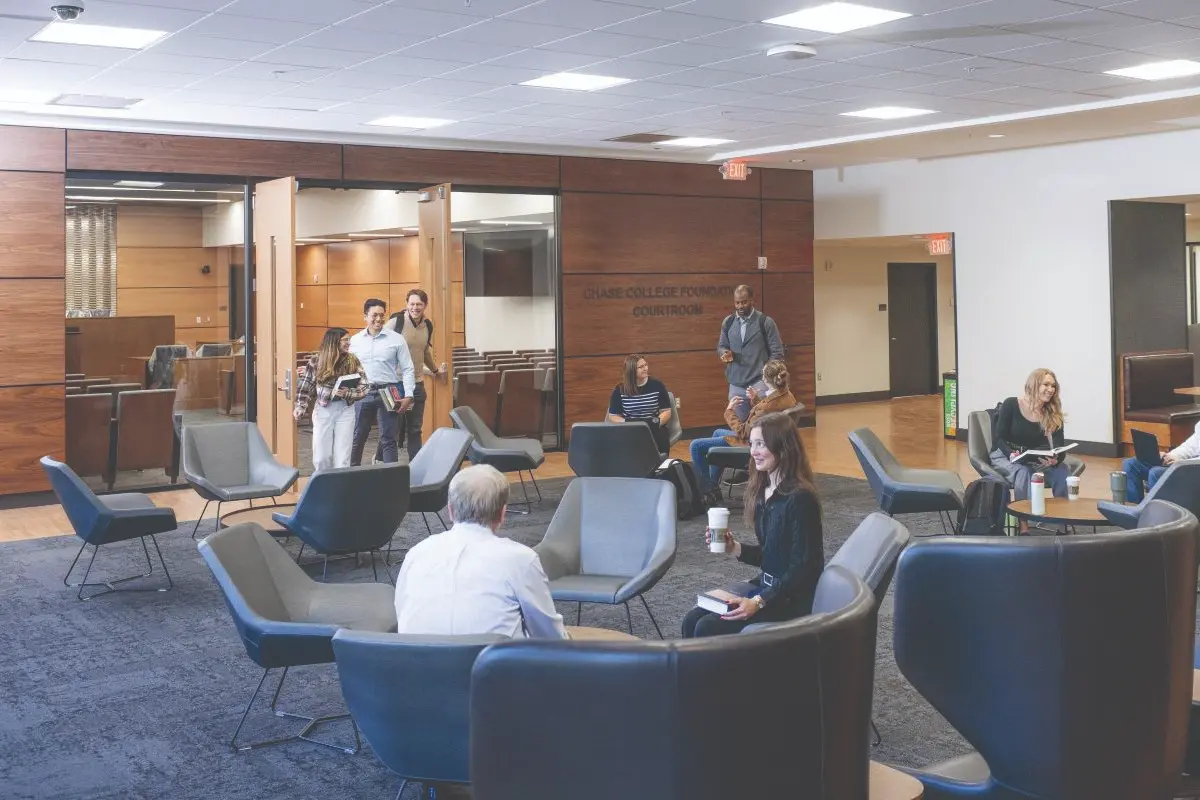
The law school recently completed a major upgrade focused on hands-on training and student space. In late 2025, the school opened the new Chase College Foundation Courtroom and adjacent Chase Student Center to strengthen the learning environment for practice-ready education.
Dean Judith Daar said the project was four years in the making.
“Our students can now learn in a space befitting the Chase reputation for training practice-ready graduates who ably assist clients at the earliest stages of their careers,” Daar said. “We are enormously grateful to the more than 125 alumni and friends who generously supported this project, making our dream of a state-of-the-art advocacy center a reality.”
The state-of-the-art courtroom is designed to mirror modern legal settings students will encounter in practice. It features a judicial bench that accommodates up to seven judges, counsel tables, a jury box, a 125-seat gallery, judge’s chambers and a jury deliberation room. The space supports trial advocacy courses, moot court and mock trial programs, and will also host proceedings for the Kentucky Supreme Court, Kentucky Court of Appeals and other state and federal courts, giving students exposure to live court operations.
Next to the courtroom, the new student center expands study and collaboration options. The space includes nine glass-front study rooms, open carrels and booths, boardroom-style tables and a central area for gathering or informal work. The project was made possible in part by transforming the law library’s first floor from traditional print storage into a digital-access hub, freeing space for student-focused uses.
Additional amenities include a quiet room for students seeking a place to decompress. Together, the new courtroom and student center reflect a strategic investment in experiential learning, modern study space and the day-to-day needs of today’s law students.
Built for the way students study
Beyond major flagship projects, many Honor Roll schools are rethinking how everyday academic space functions.
For many schools, the biggest shift is toward buildings that function as flexible academic environments rather than traditional library-centered spaces.
Extended access is becoming the norm among top performers. Quinnipiac University School of Law and Stetson University College of Law both offer true 24/7 library availability, giving students the flexibility to work around clinic schedules, externships and part-time jobs.
Capacity is another key differentiator. The University of Michigan Law School and the University of Connecticut School of Law rank among the leaders in square footage per student, providing room for a mix of quiet reading areas, reservable team rooms and open collaboration space. At Connecticut, the law school’s multi-building campus and ongoing expansion efforts reflect long-term planning for enrollment stability and growth.
Study environments themselves are becoming more varied. Instead of a single dominant reading room, many Honor Roll schools now distribute study space throughout the building, combining private carrels, group rooms and large student commons. Technology also plays a growing role. At Sandra Day O’Connor College of Law at Arizona State University and Duke University School of Law, classrooms are equipped for recording and hybrid participation, allowing students to review material later or join remotely when necessary.
Together, these features reflect a broader shift toward buildings that support different learning styles and schedules throughout the day.

From classroom to courtroom
Experiential learning is increasingly shaping how law school space is designed, with many institutions investing in facilities that mirror the environments students will encounter in practice.
Georgia State University College of Law’s clinic program operates in a setting designed to function like a working law firm, with private offices for client meetings and conference rooms for student teams and supervising attorneys. The layout reinforces professional expectations while giving students hands-on experience managing real cases.
The UConn School of Law is taking a systemwide approach to experiential learning. School leaders say the move will improve coordination, expand capacity and strengthen the role of experiential learning across the curriculum.
Courtroom space is also evolving. In addition to new advocacy centers such as the one at NKU Chase, several Honor Roll schools maintain multiple courtrooms or simulation spaces that support trial practice, moot court and negotiation exercises. Increasingly, these facilities are also used by the legal community for events, hearings and continuing education, further connecting students to the profession.
The result is a growing emphasis on buildings that serve not only as academic space but as extensions of the legal workplace.
Wellness as a priority
As law schools place greater emphasis on student well-being, building design is increasingly focused on creating environments that support both productivity and recovery.
Outdoor space has become a defining feature at many Honor Roll schools. Georgia State Law’s upper-floor terraces provide seating and views of downtown Atlanta, while other institutions have added rooftop study areas and landscaped gathering spaces that allow students to step away from indoor environments without leaving campus.
Many schools are also expanding the types of support available inside the building. University of Houston Law Center includes a meditation room, lactation space and commuter showers with changing areas, recognizing that many students balance long travel times, work responsibilities or family obligations alongside their coursework.
Quiet rooms designed specifically for decompression are becoming more common as well. These dedicated spaces give students a place to reset during demanding academic periods.
Taken together, these features signal a shift in priorities. Wellness is no longer treated as an added amenity but as a core component of the student experience.
Sustainable by design
Environmental performance has become a standard expectation among leading law facilities, with many schools incorporating systems that reduce operating costs while improving overall comfort and long-term efficiency.
While some schools have made sustainability a defining feature, other Honor Roll schools are also investing in energy-conscious design. UHLC’s recently completed facility uses extensive daylighting and high-efficiency systems to reduce energy demand while maintaining bright, usable space.
At Washburn University School of Law, its automated lighting controls, energy-saving window treatments and floor-to-ceiling windows help manage energy use and maximize natural light. These features were incorporated as part of the largest capital project in the school’s history.

Jacksonville University College of Law demonstrates how sustainability can also be achieved through renovation and operational strategy. The law school operates in a historic downtown building, where upgrades include LED lighting throughout, motion-sensor and programmable lighting controls, computer-managed HVAC systems and double-insulated walls to improve energy efficiency. The upper floors are designed to maximize natural light from the building’s atrium, while energy-efficient window treatments help reduce heat from the Florida sun. Water refill stations on each floor, bike access and proximity to public transit further support the university’s broader Green Campus initiative.
For some institutions, sustainability is also reflected in site planning and environmental integration. Lewis & Clark Law School’s campus, located adjacent to a state natural area in Portland, emphasizes landscape preservation and design choices that reflect the school’s environmental mission.
Across the Honor Roll, sustainability has moved beyond a specialized feature. It is now part of a broader strategy to build facilities that are efficient, resilient and aligned with institutional values.
The best law school buildings today do more than make a strong first impression. They support how students study, practice and recharge throughout the demands of legal training.
This year’s Honor Roll makes one thing clear: The future of legal education isn’t just shaped in the classroom. It’s built into the space itself.
Methodology
We look at aesthetics (50%), square feet per student (10%), library hours and seating seats per student (15%), amenities, including dining, fitness and lockers (15%); and parking, sustainability and other factors (10%).
Want to see more rankings? Click here to explore all law school rankings!
