
On the night of a Peruvian presidential debate last spring, Adrianna Globokar wasn’t watching from a hotel room or a lecture hall. She was playing games with her friend Pierina’s family, with the broadcast humming in the background.
By then, The University of Akron School of Law student had already taken a tango class with Pierina, shared a homemade Sunday dinner at her family’s table and traded countless conversations about their similarities and differences.
“Those experiences reminded me that understanding another legal system begins with understanding the people behind it,” Globokar said. “She personally transformed what could have been a short academic trip into a lifelong friendship.”
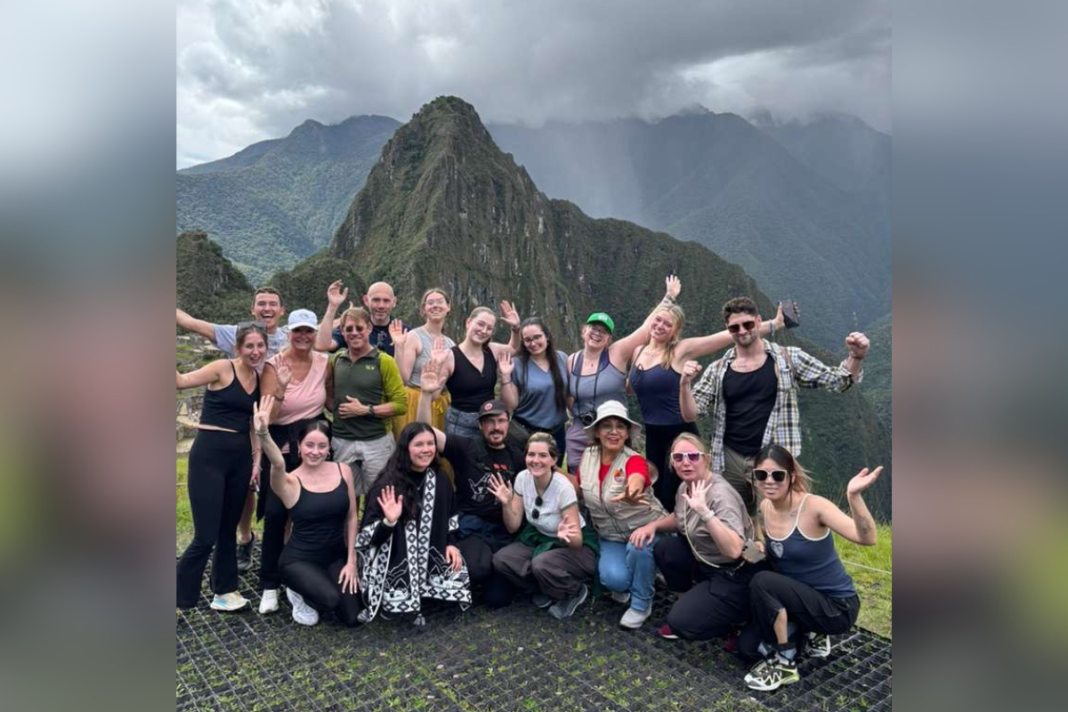
Globokar, a rising third-year student and incoming president of Akron Law’s Business Law Society and International Law Society, traveled to Peru in March through the school’s study abroad program. She came home with more than credits; she returned with both a blueprint for the international corporate practice she plans to build and a standing reason to return.
A natural next step

Globokar did not stumble into international law.
A lifelong Northeast Ohio resident, she attended Jackson’s Academy of Global Studies in high school, where the curriculum focused on international affairs, cross-cultural understanding and community engagement. The curiosity stuck. In college, she double majored in national security and foreign intelligence analysis, and international affairs and diplomacy. She led an international studies honors society and published research on international policy.
“Combined with growing up surrounded by friends and family from different cultural backgrounds, those experiences taught me to appreciate different perspectives and led me toward international law,” she said.
Before law school, she was already working at Brennan, Manna & Diamond, a national firm headquartered in Akron, and wanted to continue her career there. Akron Law sealed the decision.
“What stood out to me wasn’t just the academics, it was the culture,” she said. “From the beginning, I found a collaborative environment where professors genuinely invest in students’ goals, and classmates aren’t viewed as competitors but as teammates. Everyone is willing to share ideas, encourage one another and celebrate each other’s successes. That sense of community made it an easy decision.”
Her international work started well before the Peru trip. During her second year, she helped the International Law Society host a delegation of students visiting from Cambodia.
“That experience showed me how rewarding international collaboration could be, both professionally and personally,” she said.
Around the same time, a research issue she identified in an International Law Review course grew into a published article through a partner institution’s international law review.
“By the time the Peru program was announced, participating felt like a natural next step,” she said. “It was an opportunity to continue building international relationships while learning from another legal system firsthand.”
Never met a stranger
What surprised her in Peru wasn’t the differences.
“What surprised me most was how much we had in common despite approaching legal issues from different perspectives,” she said. “I expected to learn about another country’s legal system, but I didn’t expect to learn so much about my own.”
Working alongside students and legal professionals from another culture, she said, reinforced “the importance of listening with curiosity, approaching differences with compassion and recognizing that there is often more than one effective way to solve a problem.”
The exchange didn’t end when she flew home. She worked with her professor on a collaborative law review project involving Vietnamese scholars, coached Vietnamese students preparing for an international moot court competition and mentored Cambodian students navigating the law school application process.
The coaching stretched her. Her interests are primarily transactional but helping students sharpen their oral advocacy forced her to approach legal arguments from an entirely different angle.
“Each of these experiences reinforced that learning is a two-way exchange,” she said. “I may have been there to help, but I always left having learned just as much myself.”
Her approach to those exchanges is simple.
“I’ve always believed that I’ve never met a stranger, only someone I haven’t had the pleasure of meeting yet,” she said. “I try to enter every conversation with the goal of listening to understand rather than listening to respond.”
That mindset, she said, has taught her lessons no textbook could: how to build trust across cultures, appreciate different viewpoints and learn through genuine human connection.
“Those are skills that will stay with me throughout my legal career,” she said.
It also explains why the friendships have outlasted the program. Globokar returned to Peru in May to celebrate Pierina’s birthday and plans to visit again after she takes the bar exam.
“I believe the most meaningful relationships require intentional effort,” she said. “If you want to maintain a connection, you have to be willing to invest in it first. The friendships, the connections I formed in Peru didn’t end when our flights home departed.”
They’ve stayed in regular contact, celebrating each other’s milestones and continuing to learn from one another.
“It’s a reminder that studying abroad isn’t simply about traveling,” she said. “It’s about building relationships that continue long after the program ends.”
Say yes
Globokar always envisioned an international dimension to her career, particularly in corporate and transactional practice. Her experiences abroad didn’t change that goal. They widened it.
“Whether working on cross-border transactions, collaborating with international clients, or supporting companies operating globally, I’ve realized there are countless ways to build an internationally focused practice,” she said. “Those possibilities are far broader than I imagined when I first entered law school.”
She also assumed the global opportunities would come much later in her career. Law school taught her otherwise. She scheduled coffee conversations with attorneys, professors, business leaders and students simply because she wanted to learn, and those conversations led to international conferences, externships and research collaborations she never would have discovered on her own.
“I’ve learned that opportunities rarely arrive on their own, you have to be willing to pursue them,” she said. “Personally, I am the queen of follow up. If the opportunity is presented to me, I will do everything in my power to make it happen.”
Her advice to law students weighing a study abroad program is blunt.
“Say yes!” she said. “Opportunities like these don’t come around often, and it’s easy to let uncertainty talk you out of them. Don’t miss an experience because you’re focused on the ’what ifs.’”
The legal knowledge is valuable, she said. Vital, even. But the relationships and perspectives are what transform.
“Years from now, you’ll remember the opportunities you embraced far more than the ones you hesitated to pursue,” she said. “Studying abroad didn’t just broaden my understanding of international law. It broadened my understanding of the kind of lawyer I want to become.”
