
Human rights law is dedicated to protecting vulnerable communities, advancing global justice and holding governments and institutions accountable. These programs prepare students through experiential learning opportunities, including international fieldwork, litigation, policy research and cross-border partnerships, giving them direct exposure to pressing legal and humanitarian concerns around the world.
Here are a few developments and news from some law school human rights law programs. These schools earned A+ in our Human Rights Law Honor Roll.
Drake University Law School
Matthew Clarke, J.D. ’26, earned recognition for his scholarship in international human rights law after his essay examining Russia’s war against Ukraine received the 2026 Burns H. Weston International Human Rights Essay Prize for graduate and professional students.
Clarke’s essay, “Refuting Putin’s Narrative: Historical Revisionism, Aggression, and the World’s Duty to Ukraine,” analyzes the application of international law while challenging historical revisionism and misinformation used to justify Russia’s aggression against Ukraine.
According to the review committee, Clarke’s essay excelled “at analyzing the application of international law and in making recommendations to challenge the dangerous misinformation campaign intended to reframe the aggressive war waged by Russia against Ukraine.”
Case Western Reserve University Law School
Shortly after joining the CWRU Law faculty in 2002, Professor Michael Scharf proposed that the faculty establish the Henry T. King War Crimes Research Office, named after the former Nuremberg Tribunal prosecutor who taught at the law school from 1983 to 2009. CWRU Law celebrates the 25th anniversary of this impactful institution.
Scharf played a lead role in the creation of the International Criminal Tribunal for the Former Yugoslavia when he worked at the U.S. Department of State.
When Scharf became co-dean of the law school in 2013, he recruited Jim Johnson, the chief of prosecutions of the Special Court for Sierra Leone, to take over for him as the director of the Henry T. King War Crimes Research Office.
“Today’s law students often say they want to go to law school so they can make an impact on the world after they graduate,” Johnson said.
The main work of the War Crimes Research Office is the preparation of research memoranda for international criminal tribunals, piracy courts and INTERPOL. Each semester a dozen students enrolled in the three-credit War Crimes Research Lab undertake assignments provided by international prosecutors which are used in real cases.
“Often the projects are incredibly important because they require a depth of research that the international prosecutors lack the bandwidth to accomplish,” Johnson said. “To date, the students have written 252 research memos for five international criminal tribunals which have been downloaded by researchers around the world an astonishing 86,295 times.”
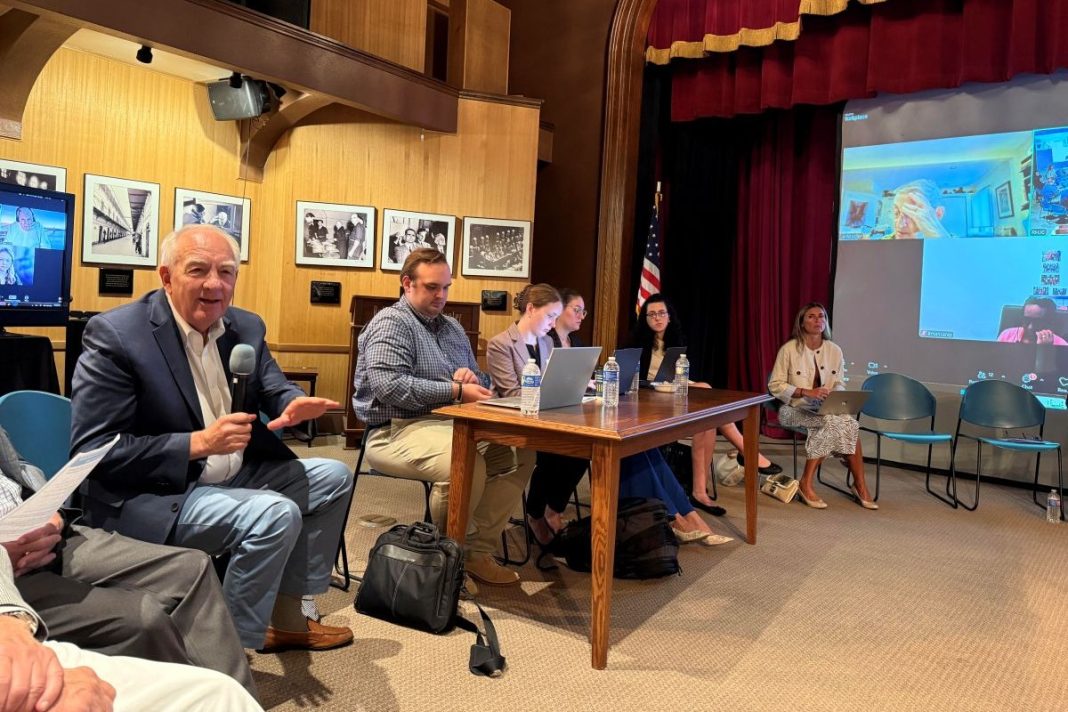
The War Crimes Research Office organizes an annual conference in August known as the International Humanitarian Law Roundtable at the Robert H. Jackson Center on the shores of Lake Chautauqua, about 90 minutes from Cleveland.
The conference doubles as an annual retreat for the world’s international prosecutors. CWRU law students serve as rapporteurs for the expert discussions which are summarized and published in an annual volume by the American Society of International Law.
University of California, Berkeley, School of Law
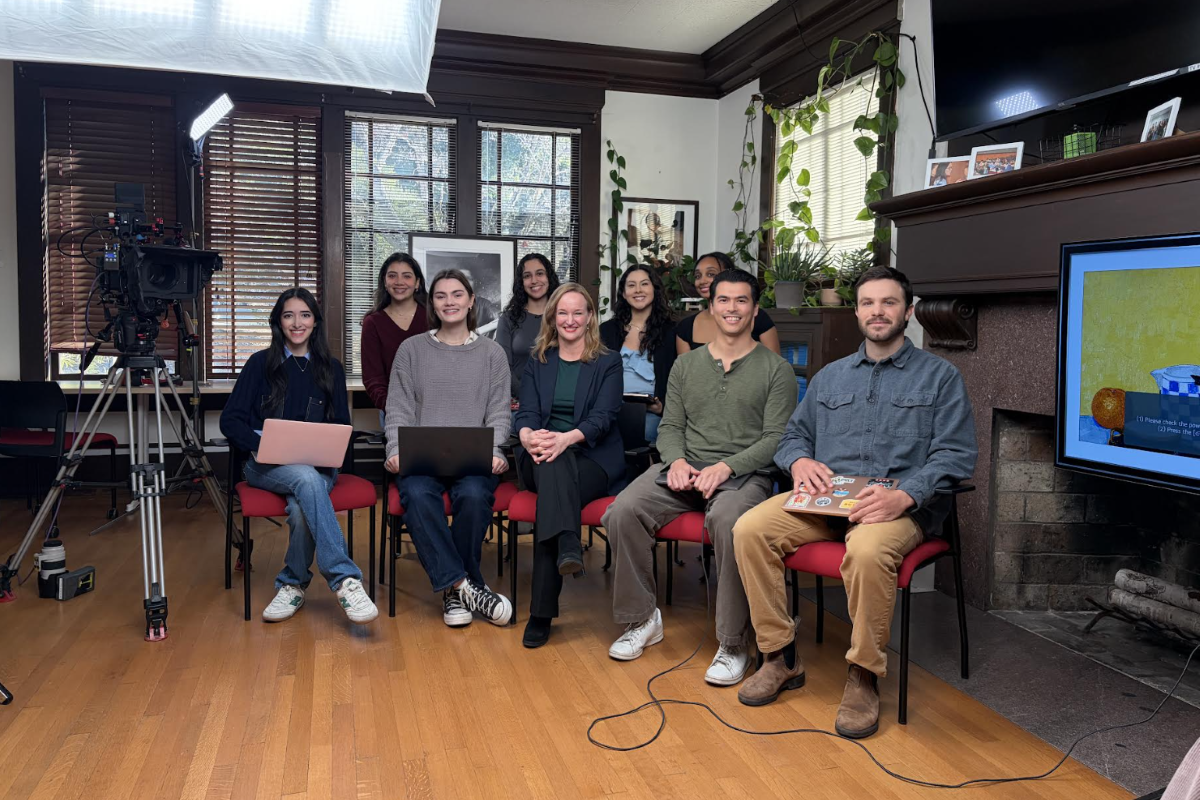
Students from the Human Rights Center’s Investigations Lab contributed to the Human Rights Watch and Cristosal report “You Have Arrived in Hell,” which documents arbitrary detention, torture and inhumane conditions experienced by Venezuelan migrants who were forcibly deported from the United States and held in El Salvador’s CECOT mega-prison.
Students used geolocation, image analysis and other verification methods to confirm detention conditions, identify security units, assess the facility’s internal layout and document the weapons and munitions used against detainees.
CBS 60 Minutes interviewed the Berkeley Law students about their work. The story aired in January 2026.
