
Innovation in family law education continues to take many forms, from clinic students helping enact legislative reform to new partnerships serving incarcerated women and scholarly forums exploring evolving definitions of family.
Here are a few developments and news from some law school family law programs. These schools earned a spot in our Family Law Honor Roll.
Mississippi Christian University School of Law (A+)
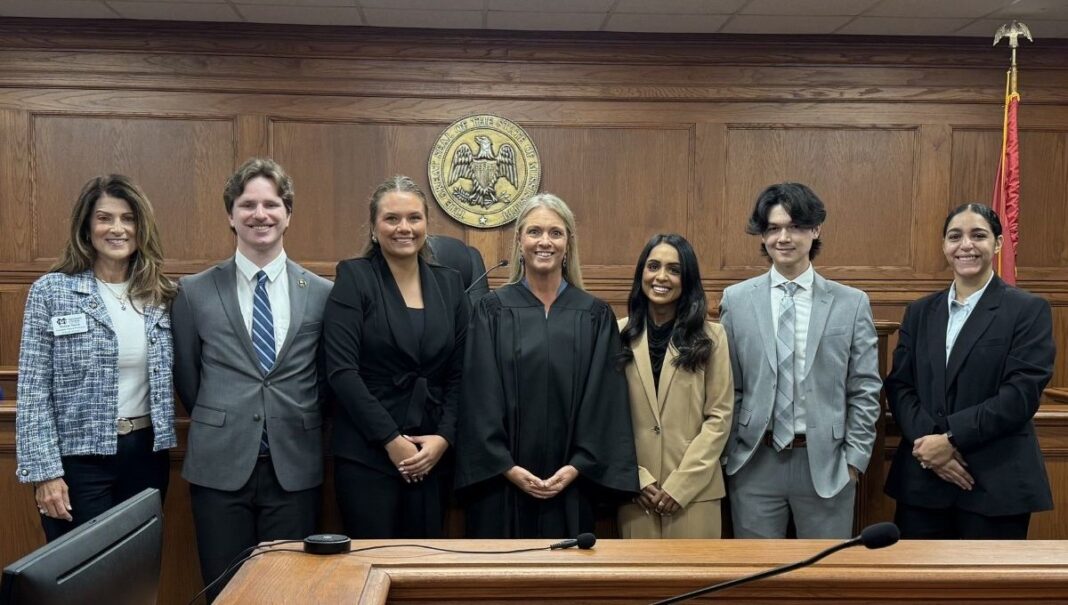
MC Law’s Children’s Advocacy Clinic provides second- and third-year law students with opportunities to participate in Chancery Court and Youth Court in the metro-Jackson area and surrounding counties. Under faculty supervision, students serve as guardians ad litem in Chancery matters and assist in Youth Court cases where the best interests of children are at the center of the legal process.
Clinic participants are provided opportunities to participate in community-based training and service initiatives designed to broaden their understanding of the challenges facing children and families involved in the legal system.
In July, clinic students attended “High in Plain Sight,” a substance abuse prevention training seminar provided by the Rankin County Youth Court where students were educated on substance abuse trends and their impact on children and families involved in youth court proceedings.
Clinic students also participated in the Hinds County Family Law Free Legal Clinic in July, an annual event hosted by Hinds County Chancery Court in partnership with Mississippi Volunteer Lawyers Project, Jackson Public School District, Mission First and the Capital Area Bar Association, to help eligible Hinds County residents with certain family law matters.
Loyola University Chicago School of Law (A+)
Loyola Chicago has expanded its Educational Advocacy Program into a fully curricular experiential learning pathway that begins in the first year of law school. Students can enroll in the Educational Advocacy Lab during the spring of their 1L year, where they conduct client intakes and participate in simulations designed to build culturally responsive advocacy skills. As 2Ls, students can continue their training through the Educational Advocacy Practicum, representing clients in school discipline, special education and bullying matters.
Students in Loyola Chicago’s Legislation and Policy Clinic achieved a notable milestone this year when two bills they worked on were signed into law, giving students direct experience in legislative advocacy and policy development.
One student team partnered with the state’s Youth Advisory Board to research, draft and advocate for SB 3196, legislation aimed at improving the transition to adulthood for youth in state care. The law, passed this spring, takes effect in January 2027. Students worked alongside young people impacted by the system, helping develop advocacy skills and supporting negotiations throughout the legislative process.
Another clinic team helped advance PA 104-0449, effective July 1, 2026. The law raises the minimum age for secure detention of arrested youth and emphasizes community-based alternatives to detention. It also establishes the Child First Task Force, bringing together legislators, juvenile justice leaders, advocates, community members and individuals with lived experience to recommend reforms that improve outcomes for young people.
A third student team worked with the legislation’s sponsor to create a comprehensive legal guide for the Child First Task Force. The guide will assist policymakers in evaluating the Illinois Juvenile Court Act, assessing detention facility conditions and identifying needed reforms to the state’s juvenile justice system.
University of Baltimore School of Law (A)
The Family Law Clinic recently launched a new partnership with PIVOT Baltimore and the Maryland Correctional Institution for Women (MCI-W), creating new experiential learning opportunities for law students while expanding access to family law education for incarcerated and formerly incarcerated women.
As part of the initiative, Family Law Clinic students developed and presented “Know Your Rights” workshops covering divorce, child custody, child support and related legal processes. Students delivered programming through PIVOT Baltimore, a nonprofit that helps women returning from incarceration reconnect with their families, communities and careers.
The clinic also partnered directly with MCI-W, Maryland’s only women’s correctional facility, to provide family law educational programming focused on issues that arise during incarceration and reentry. The project gives students practical client-centered experience while serving an often-overlooked population.
Benjamin N. Cardozo School of Law, Yeshiva University (A)
Cardozo Law continues to host the New York Family Law Workshop, a scholarly forum that meets approximately nine times each year to discuss new family law research. The workshop draws participants from across the country and includes emerging scholars, active professors and retired faculty members.
Last year, Cardozo Law hosted the Polyamory and the Law Roundtable, believed to be the first event of its kind focused on the intersection of polyamory and family law. The two-day gathering brought together academics, attorneys and advocates from multiple disciplines to examine existing legal frameworks and develop strategies for future scholarship and policy reform.
Professor Edward Stein co-chaired the event, which included 25 participants discussing the current legal landscape and future directions for research and advocacy. The second roundtable is scheduled to be held at Brooklyn Law School this November, with Cardozo’s Family Law Program continuing as a co-host.
