
Health law programs across the country continue to expand opportunities for students through innovative clinics, interdisciplinary partnerships, new research initiatives and experiential learning programs.
Here are a few developments and news from some law school health law programs. These schools earned a spot in our Health Law Honor Roll.
Suffolk University Law School (A)
Suffolk Law is advancing health law education and client advocacy through innovative clinic partnerships, successful benefits appeals, interdisciplinary collaboration and student-led scholarship.
In the Health Law Clinic, students worked with the Massachusetts Doula Coalition and the Mass Law Reform Institute to develop practical HIPAA guidance for doulas following MassHealth’s decision to cover doula services, helping providers meet new regulatory requirements while preserving community-based care practices.
The clinic also secured significant victories for medically complex clients. Student attorneys successfully restored in-home skilled nursing hours for severely disabled individuals before the MassHealth Board of Hearings and won a disability appeal that provided a client with backpay and ongoing monthly benefits.
In a unique interdisciplinary initiative, the Health Law Clinic now partners law students with Suffolk psychology undergraduates to strengthen representation of clients with mental health diagnoses. The clinic’s director and a Psychology Department professor will present the collaboration’s approach at a regional psychology conference in November.
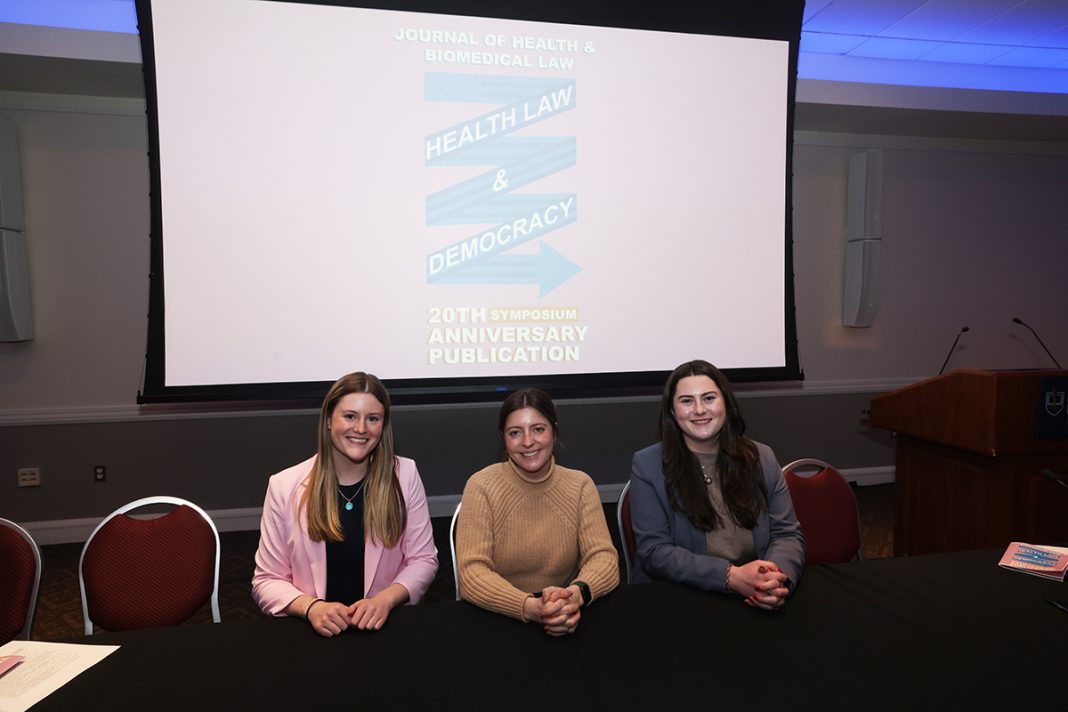
Students continue to take a leading role in shaping health law discourse through the Journal of Health and Biomedical Law. Student editors and staff organize the journal’s annual symposium, which brings together prominent speakers to discuss developments in areas such as artificial intelligence, telehealth and regulatory challenges. The next symposium is scheduled for February 25, 2027, and will also feature student research presentations and poster sessions.
University of California, Berkeley, School of Law (A)
Berkeley Law has launched the Life Sciences Law & Policy Center (LSLP), a new interdisciplinary hub focused on legal and policy issues in health law, biotechnology, intellectual property, bioethics, digital health and the regulation of emerging therapeutics. Directed by Vincent Joralemon and supported by faculty co-directors, the center aims to advance scholarship, student training and public engagement in the life sciences sector.
Student involvement is a central component of the center’s mission. This fall, LSLP welcomed its inaugural cohort of Student Fellows, bringing together J.D., LL.M. and graduate students to conduct research and participate in specialized coursework.
The center also recently launched the LSLP Forum, providing students with opportunities to publish faculty-mentored commentary on current issues affecting life sciences innovation. In addition, students have contributed scholarship to the Berkeley Technology Law Journal on topics ranging from pharmaceutical antitrust and patent law to health privacy, anti-kickback compliance and FTC health breach notification requirements.
The center’s growth has also spurred the development of the student-led Health and Life Sciences Law Society (HaLS), which connects students with speakers, networking opportunities and mentorship in health and life sciences law. Recent programming has featured discussions on wearable technologies, public health policy, FDA regulation of psychedelics, the history of eugenics in health law and career opportunities with health law-focused legal employers. Together, LSLP and HaLS are expanding Berkeley Law’s offerings and engagement in the rapidly evolving life sciences field.
University of Houston Law Center (A+)
UHLC continues to expand opportunities for students and alumni through the Health Law & Policy Institute (HLPI), which recently launched Friends of HLPI, a new community of alumni and practicing health law attorneys dedicated to supporting mentorship, professional networking and philanthropic engagement. Established in fall 2025, the organization aims to strengthen connections among health law professionals while investing in the next generation of leaders. Following a successful inaugural networking event this spring, Friends of HLPI is planning additional mentorship and networking programs for students, alumni and practitioners.
A cornerstone of these efforts is the Friends of HLPI and UHLC Professional Mentoring Program, which pairs J.D. and LL.M. students with experienced health law attorneys. The program provides guidance on career planning, networking, job searches and professional development, with mentors committing to support students throughout a one-year relationship. Students are matched with mentors based on practice interests, career goals and other preferences to foster meaningful professional connections.
The institute has also introduced a new scholarship opportunity through the generosity of Kirk Dobbins (J.D. ’93), vice president and regional counsel for Kaiser Foundation Health Plan and Hospitals. The Kirk L. Dobbins American Health Law Association Travel Scholarship Award will help UHLC students attend the American Health Law Association’s annual Fundamentals of Health Law Conference, one of the profession’s premier educational and networking events.
Georgia State University College of Law (A+)
Georgia State Law is introducing a new Constitutional and Health Law Moot Court Competition through a collaboration between the Center for Law, Health & Society, the Emmet J. Bondurant Center for Constitutional Law, Practice and Democracy and Moot Court.
The innovative competition will challenge students to examine constitutional law issues related to the regulation, delivery, financing and governance of health care, public health and bioethics. Designed with an interdisciplinary focus, the program will encourage law students to collaborate with students from health-related fields, including public health, medicine, health administration and nursing.
In addition to preparing traditional appellate briefs and presenting oral arguments, participating teams will have the opportunity to submit an amicus brief addressing the case’s potential impact on health outcomes and health equity. Organizers believe this unique component will strengthen students’ understanding of how legal decisions can influence public health and access to care.
Awards for the competition are made possible through a generous gift from the family and friends of the late Sal Lucido, a Georgia State Law alumnus who spent decades serving in policy and leadership roles at the Centers for Disease Control and Prevention.
The inaugural year will serve as a pilot program and will be open to a limited number of teams. Additional details regarding registration, competition timelines, release of the problem and brief submission deadlines will be announced soon.
