

When Cambodian native Chandaralen “Len” Phe first arrived in Atlanta with her family in 2019, she knew she wanted a career in the legal profession.
Phe, who has a bachelor of law from Royal University of Law and Economics in Phnom Penh, hadn’t taken the bar exam in Cambodia and was unsure about her path.
After securing a position as a paralegal at Molden & Associates, she applied to the Legal Analytics and Innovation LL.M. program at Georgia State University College of Law.
“I was always intrigued by technology,” Phe said. “I did not plan to pursue the bar route initially because I did not think I could be an attorney in the U.S. because the legal system is so different here, and one of the requirements to sit for the bar with an LL.M. is being a foreign-licensed lawyer.”
But after speaking to a former director of the LL.M. program who shared the benefits of becoming a licensed attorney and explained the waiver petition allowed under the regulations, she adjusted her application — a decision she doesn’t regret.
Today, Phe is a litigation associate at Denmark Ashby & Matricardi, after earning an LL.M. in the Practice of Law in the U.S. with a concentration in Legal Analytics and Innovation.
“It worked out very well,” said Phe, who passed the Georgia bar exam. “I was able to earn my degree without the same expense as I would have had by getting a J.D. I also received a merit-based scholarship that helped pay for the program.”
She added that one of courses was co-taught by a linguistics professor who helped international students acclimate to the legal language, improving communication skills.
“This inclusive and supportive environment made the learning experience rewarding,” Phe said.
Making the selection
For Phe, selecting a program and law school was straightforward since she was already based in Atlanta. For many international students, the process is far more complex.
“For students considering an LL.M., the first question they need to ask themselves is what are you hoping this degree will allow you to do,” said Brian Sites, director of LL.M. and non-J.D. programs at Georgia State Law. “An LL.M. is a vehicle. Where do you want it to take you? If the goal is to practice law in the U.S., complete a program that meets the criteria of the jurisdiction where you want to take the bar exam.”
He said students should also keep in mind that not all states allow attorneys with a law degree from another country to take the bar and some jurisdictions have strict rules about online courses.
“For example, Georgia and New York have important rules about in-person attendance so courses generally cannot be taken online,” Sites said.
Michael Scharf, former dean at Case Western Reserve University School of Law in Cleveland who now serves as associate dean for global legal studies, said he recommends prospective students consider a school’s ranking, the size of the student body, age of the LL.M. program and the extent to which LL.M. students are integrated with J.D. students.
“I think some of these schools are enormous and it’s easy for students to get lost amongst their peers,” Scharf said. “Smaller schools with robust LL.M. programs that have been in existence for a while usually provide a better experience.”
Scharf said they’ve continuously refined their LL.M. programs over the past 35 years, and have also graduated 1,500 students from a wide variety of countries.
Over at University of Southern California Gould School of Law in Los Angeles, Sarah Gruzas, director of graduate and international programs and special projects, said students should make sure the curriculum they’re interested in is offered and that the location of the school is a place they might be interested in pursuing employment after graduation.
“We encourage all our applicants to connect with alums, so they have an idea what to expect,” Gruzas said.
A multitude of offerings
While many schools offer LL.M. degrees, some institutions have more comprehensive programs than others.
Students at CWRU Law can choose to pursue an LL.M. in U.S. and Global Legal Studies, Intellectual Property Law, International Business Law or International Criminal Law.
“Our U.S. and global legal studies LL.M. prepares students to take the U.S. bar exam; they can also opt for one of several certificates of concentration,” Scharf said.
The one-year program is 24 credits. An LL.M. Plus option allows students to extend their time to take additional courses and undertake an internship or externship at a law firm or corporate general counsel.
The law school also offers a two- to three-year S.J.D. (Doctor of Juridical Science) program, which is open to students who have obtained an LL.M. from CWRU Law or another law school. It requires students to complete a dissertation.
Scharf said the school accepts LL.M. applicants with any undergraduate degree.
While applicants are required to be proficient in English, the law school’s Summer Language and Law Institute enables students with lower TOEFL (Test of English as a Foreign Language) scores to refine their English writing skills and introduces them to legal analysis.
Throughout the program, LL.M. students have access to the career development office, which assists them with resume writing and internship opportunities.
A commercial bar preparation course is also available to the LL.M. students at a low cost, and there is a spring semester class that helps prepare them to take the bar exam.
Students are also paired with a J.D. student mentor who guides them in their work and shows them around Cleveland, taking them to movies and cultural events.
“We realize one key reason foreign students come to the U.S. to study is because they want to be fully immersed in American culture,” Scharf said. “We’ve designed our program to allow them to do just that.”
The school welcomes LL.M. students with community events and local experiences, including a summer picnic featuring the faculty-student band, a traditional Thanksgiving dinner and field trips to destinations like Cedar Point amusement park and Niagara Falls.
Graduates have become judges, law professors, corporate general counsel, law firm managing partners and even the foreign minister of Canada, Scharf said.
“They are engaged alumni who help current LL.M. students follow in their footsteps,” he added.
USC Gould features eight LL.M. degrees, five of which focus on specialized areas. The most popular choice is the one-year general LL.M. program, which can be tailored to allow students to take the bar exam or obtain a certificate in a specialization or both.
“This is our most flexible program,” Gruzas said. “There are only two required courses. Our specialized programs include more mandatory courses in focused areas of law.”
All of the LL.M. degrees offer students the opportunity to enroll in courses to satisfy the LL.M. course requirements to take the bar in California, New York and several other jurisdictions. There are no minimum TOEFL or IELTS (International English Language Testing System) scores required to gain admittance.
Students who would benefit from additional English support can participate in the four-week Summer Law and English program or opt for the two-year general LL.M., where they’ll spend the first year learning about the U.S. legal system and mastering legal English.
In addition to in-person options, there is also a part-time fully online LL.M., which allows students to select different certificate options, including focus areas in compliance, healthcare and privacy law.
“Students in the online LL.M. can complete coursework to prepare for the California bar exam,” Gruzas said. “The majority of our students pursue optional practical training at a law firm or company after completing the program and about 10% stay beyond their optional practical training period.”
USC Gould attracts a diverse community of students from around the world, including many practicing attorneys and judges. The school provides career and bar exam support tailored to the needs of foreign-trained law graduates seeking success in the U.S. legal market. Through its summer program, students gain exposure to Los Angeles and its legal community with visits to law firms, courts and local cultural landmarks.
Students can also opt into the school’s mentor matching program before the academic year begins or participate in the online academic excellence course or online bar prep lectures.
Georgia State Law students who want to take the bar exam can select an LL.M. for the Practice of Law in the U.S., with the option of adding a concentration in health law or legal analytics and innovation.
The bar-track LL.M. is a 26-credit program with specific course requirements that will allow students to take the Georgia or New York bar, Sites said. The bar-track courses are offered at night because many LL.M. students have obligations during the day.
The law school also has LL.M. programs for domestic attorneys and lawyers from abroad who are not planning to take the bar exam.
“If you are looking to specialize in an area or don’t plan to practice law in the United States, then a bar-track program may not be the best option,” Sites said. “You could instead consider a specialty track LL.M. like our health law or legal analytics LL.M. programs.”
Applicants are required to demonstrate proficiency in English through a language test like TOEFL or by having succeeded in previous courses taught in English.
While most arrive ready to begin the program, some may be required to complete additional classes through the linguistics department on the main campus to gain admittance.
“We provide robust support to students prior to admission, during the program and after graduation,” Sites said. “For example, we run a bar support program throughout students’ time at the College of Law that helps students decide what classes to take and how to prepare for the exam and gives them many opportunities to practice bar exam skills.”
But it’s not just about the bar exam, Sites said.
“Creating a welcoming environment is really important to us,” he said. “We connect students with mentors who either graduated from our LL.M. program or have international experience in the area they are interested in, and there are a variety of events on campus that are open to all students.”
The LL.M. student body includes attorneys from Nigeria, Brazil, India, the United Kingdom and several other countries.
Finding the right fit
With so many choices, picking the right program is no mean feat for many students. However, having a pre-existing wish list can go a long way toward making a selection. For example, Kenyan attorney Ian Chomba chose USC Gould’s LL.M. in Privacy Law and Cybersecurity because of his passion for technology.
Chomba, who is licensed in Kenya, held two in-house counsel positions at businesses in the financial and technology space before investigating and applying to LL.M. programs primarily located in the U.S., the United Kingdom and Australia.
“I had always envisioned doing a master’s degree abroad,” Chomba said. “I was looking for a place that would allow me to learn more about technology and given that California is home to the top technology companies in the world and Silicon Valley, it was one of my top choices.”
He chose California in part for its reputation as a welcoming environment for foreign-trained attorneys. After initial conversations with USC Gould, he felt confident it was the right fit — the school guided him through the application process, offered insight into career opportunities and fostered a supportive atmosphere.
Chomba expects to complete the program in May 2026 and is leaning toward taking the bar exam in either California or New York, preference being California.
“I want to do an externship next semester, and the school is helping me prepare my resume and cover letters,” Chomba said. “I’ve started applying, and based on where I get my opportunity, that will inform my next steps. I am exploring externships in California but keeping my options open for New York in case I can get a placement that opens my opportunities there.”
CWRU Law U.S. and Global Legal Studies LL.M. graduate Abdullah Alshomrani said he selected the program for a few reasons.
At the top of the list, he said the school has a great academic reputation and he liked the international and comparative law focus that was offered.
The school is also well known in his native Saudi Arabia due to a memorandum of understanding with the country’s Administrative Court, which has boosted cooperation between the two in the areas of law, research and training.
After completing his LL.M. with a concentration in international law in January 2023 and obtaining a certificate in compliance and risk management in the summer of 2025, he’s now enrolled in the S.J.D. program.
He’s also doing an internship at Schneider Bell in Cleveland.
Alshomrani said his experience at CWRU Law exceeded expectations. He credited the school’s summer program for helping him “learn how to read and analyze legal cases and documents,” which eased his transition into LL.M. coursework.
“The school really makes you feel like you belong.” he said.
LL.M. spotlights
Goksu Aycil Altinok (Turkey)
LL.M. graduate, UCLA School of Law

A Fulbright scholar from Istanbul, Goksu Aycil Altinok chose UCLA School of Law for its renowned Media, Entertainment, Technology and Sports Law and Policy program. Entertainment law and motion picture distribution have deepened her understanding of the TV and film industry, while a sports law clinic gave her hands-on experience through a mock NBA project. She values how U.S. legal education integrates innovation and practical learning, preparing her to help bridge the gap between technology, business and law as she pursues her Ph.D. and global legal career.
Andreina Gutierrez (Venezuela)
LL.M. graduate, Florida International University College of Law
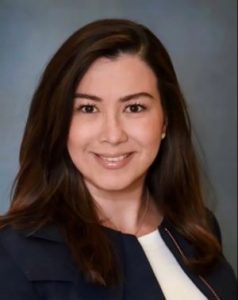
A Venezuelan attorney and mother of two, Andreina Gutierrez came to the United States seeking a better future for her family. She earned her LL.M. from Florida International University College of Law in 2020, graduating with the highest GPA in her class and receiving the Outstanding Academic Achievement Award. The experience, she said, taught her resilience and reinforced her commitment to service. Now pursuing her J.D. at FIU Law, she works with the school’s Immigration Clinic to assist Venezuelan immigrants applying for Temporary Protected Status — continuing her mission to promote justice and give back to her community through the law.
Anna-Lena Schoofs (Germany)
LL.M. graduate, Suffolk University Law School

For Anna-Lena Schoofs, earning an LL.M. in Global Law and Technology at Suffolk University Law School was a natural next step. After studying there as an exchange student in 2016, she knew the program’s strong focus on intellectual property and technology law aligned with her goals. She wanted to study in the U.S. to gain practical insight into how American courts and firms address fast-evolving issues like artificial intelligence. Now, she’s deepening her expertise in global IP and data law and hopes to apply that knowledge at an international firm or research institution bridging the U.S. and Europe.
Priyanka Sule (India)
LL.M. graduate, Case Western Reserve University School of Law
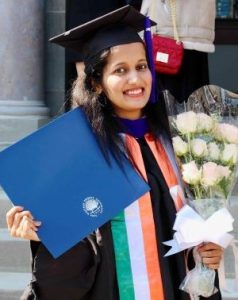
Raised in a family of lawyers in Gujarat, India, Priyanka Sule always knew she wanted to follow in their footsteps. Seeking a global perspective, she moved to the United States in 2017 to earn her LL.M. in Global Legal Studies at Case Western Reserve University School of Law. The small class sizes and supportive faculty made her transition easier. After passing the New York bar in 2021, she joined The United Firm (La Liga Defensora, APC) as an immigration attorney, where she combines her bilingual skills and personal immigrant experience to help families navigate U.S. immigration law. “I wanted to understand the American legal system and experience a new culture,” she said.
Mekebib Solomon (Ethiopia)
LL.M. and J.D. graduate, University of Missouri – Kansas City School of Law

After earning his LL.B. in Ethiopia and serving as a federal judge, Mekebib Solomon faced government threats for releasing detainees held without due process. Forced to flee, he sought refuge in Kenya before resettling in the United States in 2013. He completed both his LL.M. and J.D. at the University of Missouri – Kansas City School of Law while working to support himself. Now an immigration attorney in Annapolis, Maryland, he draws on his own journey to advocate for others. “Helping immigrants is my passion,” he said. “I never gave up and believed in myself.”
Daniel Salomon Sotomayor (Mexico)
LL.M. graduate, University of Texas School of Law
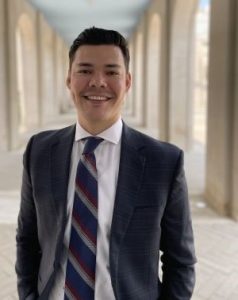
Daniel Salomon Sotomayor came to the University of Texas School of Law to pursue his longtime interest in energy and environmental law. After earning a law degree in Mexico, he spent years building professional and academic experience before moving to Austin in 2021 for the LL.M. program in Global Energy and International Arbitration. The program’s practical focus and exposure to top industry experts prepared him for his current role as an associate at Norton Rose Fulbright in New York, where he works on renewable-energy and infrastructure projects across the Americas. He said the LL.M. program was the best experience of his life.
