
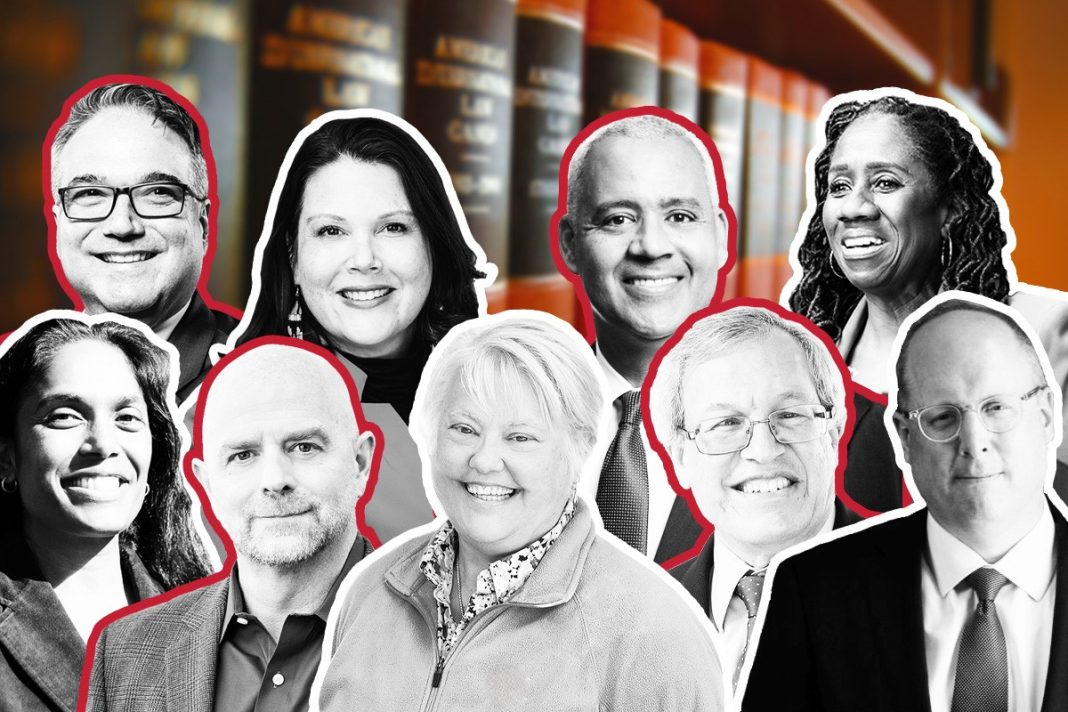
Legal education is never static, and each year a handful of leaders help set its direction. Deans, scholars and innovators shape how schools adapt to new challenges — from access and affordability to technology, accreditation and the future of licensure. To capture who is driving those conversations, The National Jurist assembled a curated list of standout leaders and asked law school deans to rank them based on their influence over the past year. We encouraged respondents to think about who sparked new ideas, introduced reforms, inspired their peers or pushed them to see their work differently. The result is a roundup of the 25 most influential people in legal education today, highlighting the voices who are moving the field forward and redefining what leadership looks like in a changing landscape.
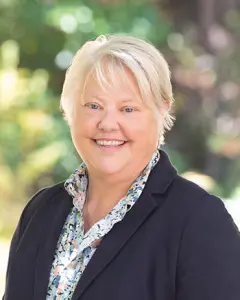
#1 Kellye Testy
Executive Director and Chief Executive Officer, Association of American Law Schools
Testy has spent her career at the center of legal education’s most pivotal changes. As executive director and CEO of the Association of American Law Schools, she has guided law schools through rising political pressures, debates over academic freedom, shifts in accreditation and a rapidly evolving profession. Before joining AALS, she served as president and CEO of the Law School Admission Council, where she modernized admissions and strengthened work around diversity and inclusion. Earlier, as dean of University of Washington and Seattle University, she became the first woman to lead each institution, earning a reputation as a “dean’s dean” who blends mission-driven leadership with a steady hand during uncertainty.
Today, Testy is widely seen as one of the most influential leaders in American legal education. And in conversation, it’s clear why. She brings an unusually broad view of the field — one rooted in governance, admissions, student experience and the day-to-day realities of law schools nationwide.
“I’m going to start with technology,” she said. “Technology is always a factor that changes things a lot.”
Testy sees technology as the force most reshaping how law schools operate. She noted that the rise of AI has moved law schools from hesitation to full engagement. Rather than resisting new tools, schools are now designing ways for students to use them responsibly and effectively.
“I love that turn that I’m seeing,” she said, adding that students who can bring technological fluency to clinics, firms and public-interest roles will be “able to contribute that to their clients and their firm” in meaningful ways.
Technology has also removed barriers that once held back online legal education. After the pandemic, Testy watched the national conversation shift from whether online programs were possible to what high-quality online teaching should look like.
“Good teaching is good teaching regardless of the mode that you do it,” she said.
What matters now is intentionality, outcomes and rigor — not whether a course is in a classroom or offered online.
Beyond technology, she pointed to the broadening scope of what legal education includes. Law schools once operated almost exclusively as J.D. programs. Today, many house LL.M.s, master’s degrees, undergraduate programs, online tracks and hybrid formats. Students arrive with a wider variety of academic backgrounds, ages and life experiences.
That diversity, she said, “is great because we need that breadth in law.”
Student wellness is another urgent theme emerging from deans across the country.
“There is a deep care for the student as a whole person,” she said.
The pressures of law school, combined with financial insecurity and earlier hiring timelines from large law firms, have created strain that schools are working hard to address. She’s especially concerned about how accelerated recruiting affects first-generation students who may need more time to adjust.
“When you’re first-gen, you don’t always hit the ground running,” she said. “Compressing hiring only intensifies that unevenness.”
Despite the challenges, Testy is optimistic about the next generation of lawyers. Students are entering law school “out of a desire to make the world better,” she said — a shift supported by LSAC research. They’re also more diverse and more comfortable with technology than any class before them. The task ahead, in her view, is helping students translate passion into craftsmanship.
“A desire to do justice is not the same thing as knowing how to do it,” she said. “The fundamentals — critical thinking, problem-solving, judgment — still matter most.”
Testy sees legal education as stronger than ever.
“Legal education … has never been better than it is right now,” she said.
She credits the deep, daily work happening across law schools and believes the strength of the U.S. system lies in the multitude of high-quality options available nationwide.
Even with the complexities, she said the heart of education is unchanged.
“One of the epitomes of education is that it’s supposed to inspire us to really grow as people and to think about and hear things that we may disagree with,” she said.
She emphasized the need to “cultivate diverse viewpoints, respectfully stated,” and said she believes “we can find our way with difference and civility at the same time,” but only if schools commit to the hard work of getting there.
As for the future, she’s focused on supporting the people who shape it.
“My hat’s off to all the deans that I work with every day,” she said. “They show up every day to do that important work.”
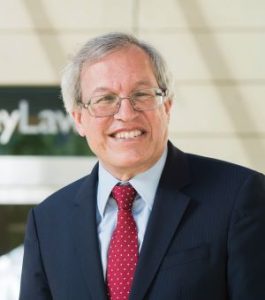
# 2 Erwin Chemerinsky
Dean, University of California, Berkeley, School of Law
Chemerinsky is one of the most influential figures in American legal education. A leading constitutional scholar, his casebooks and treatises are used in classrooms across the country and have shaped how generations of lawyers and judges understand constitutional law.
As founding dean of University of California, Irvine School of Law, he built a top-tier institution in less than a decade. At Berkeley Law, he has strengthened the school’s global reputation for academic excellence by expanding experiential learning, clinics and interdisciplinary programs. He continues to guide national dialogue on the Constitution, democracy and academic freedom — issues central to the future of legal education. His “It’s the Law” video series brings clarity to current legal questions for broad audiences, and his forthcoming 2026 book on campus speech and academic freedom underscores his commitment to open discourse in higher education.
Through his scholarship, teaching and public leadership, Chemerinsky exemplifies how legal educators can influence students and the nation’s understanding of law and democracy.
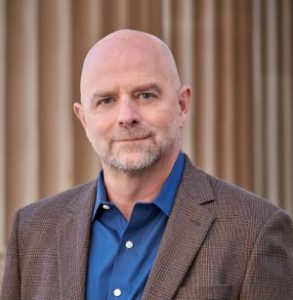
#3 Christopher Chapman
President and Chief Executive Officer, AccessLex Institute
For more than 15 years, Chapman has led AccessLex Institute’s transformation into the nation’s largest nonprofit focused on access, affordability and student success in legal education. When he became president and CEO in 2008, he guided the organization’s shift from a nonprofit lender to a national thought leader grounded in one principle: advancing student well-being.
Under Chapman’s leadership, AccessLex has launched programs that now reach nearly every U.S. law school. MAX, the financial literacy platform, serves nearly 100,000 students; AccessConnex provides one-on-one financial coaching; and JD Edge, LexCon, AskEdna and XploreJD strengthen student preparedness and career outcomes. Chapman has also been a leading voice in federal loan reform, advising lawmakers and advocating for policies that protect access for lower-income students.
He has expanded the organization’s national pipeline initiatives — LexPreLaw, LexPostBacc and LexPostBacc Direct — which have supported more than 1,200 aspiring students from underrepresented backgrounds. Through research, grants and tools like The ARC and Analytix, AccessLex continues to drive data-informed innovation across legal education.
Chapman’s vision has reshaped how law schools support financial wellness, broaden access and improve outcomes for the next generation of lawyers.
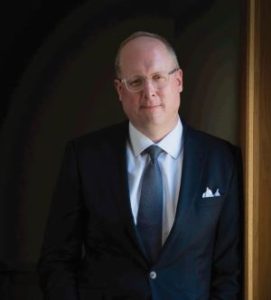
#4 Austen Parrish
Dean and Professor, University of California, Irvine School of Law
Parrish has spent more than 13 years leading law schools and advancing access, excellence and integrity in legal education. As president AALS during its 125th anniversary year this past year, he has helped guide the national conversation on the future of legal education and accreditation.
Before joining UCI Law in 2022, Parrish served eight years as dean of Indiana University Maurer School of Law – Bloomington and previously held senior roles at Southwestern Law School. At UCI Law, students twice named him Administrator of the Year (2024 and 2025), reflecting his impact on the campus community.
A respected scholar of international and transnational law, Parrish’s influence extends well beyond academia. He serves on the boards of AccessLex Institute and the Public Law Center, is a fellow of the American Bar Foundation and co-edits the Journal of Legal Education. He has been a leading national voice on access, student debt and attacks on higher education, with commentary appearing in The Hill, Bloomberg Law, Forbes and the ABA Journal.
Parrish’s blend of academic leadership, public service and advocacy makes him one of today’s most influential figures in legal education.

#5 Sudha Setty
President and Chief Executive Officer, Law School Admission Council
Setty became president and CEO of LSAC in July 2025, stepping into a national leadership role at a moment of rapid change in legal education.
She previously served as dean of City University of New York School of Law and earlier as dean of Western New England University School of Law, where she pursued structural reforms that strengthened social justice, public interest lawyering and access to legal education. At CUNY Law, Setty expanded the Pipeline to Justice initiative and founded the First Impressions Youth Legal Collaborative, which introduces middle school, high school and college students to civics, law and justice. A nationally recognized scholar in national security and comparative civil rights law, she is an elected member of the American Law Institute and practiced at Davis Polk & Wardwell early in her career.
Setty was the first South Asian American woman to lead an ABA-accredited law school and has long emphasized inclusive leadership and collaboration across institutions to advance access, equity and excellence in legal education.

#6 Jenn Rosato Perea
Managing Director, ABA Section of Legal Education and Admissions to the Bar
Rosato Perea began her role as managing director of the ABA Section of Legal Education and Admissions to the Bar on June 1, stepping in to lead the nation’s law school accrediting body at a pivotal moment.
She now oversees the council recognized by the U.S. Department of Education as the sole national accreditor of the 197 ABA-approved law schools and is guiding its consideration of major updates to accreditation standards, including those involving learning outcomes, faculty tenure and security of position, diversity and inclusion and the accreditation of fully online law schools.
Before joining the ABA, Rosato Perea served 16 years as a law dean, most recently at DePaul University College of Law. A longtime advocate for student engagement, academic freedom and professionalism, she was one of the country’s few Latina law deans and is now the first woman to lead ABA legal education. Her position places her at the center of national discussions about access, equity and innovation in legal education.

#7 Anthony Crowell
Dean and President, New York Law School
Now in his 14th year as dean, Crowell is one of the longest-serving law deans in the country and the longest-serving in New York State.
A first-generation college graduate and former part-time evening student, he has made access, innovation and civic leadership central to New York Law School’s mission.
Under his leadership, NYLS has built a strong identity as “New York’s law school,” aligning its programs with the city’s fast-growing legal markets in financial services, technology, public interest and government.
Crowell launched the Think BIG curriculum and strategic plan, integrating academic and career development functions and producing record employment outcomes, including a 94% job placement rate for the Class of 2024. He has also founded new academic centers and leadership programs, strengthening the school’s role as a pipeline into New York’s public and private sectors.
Nationally, Crowell serves on the Executive Committee of the Association of American Law Schools and is founding president of the National Association of Standalone Graduate Schools. Active in public service, he sits on the New York City Planning Commission and chairs the state’s Independent Review Committee for Ethics and Lobbying nominations. His leadership continues to shape legal education and civic engagement across New York and beyond.
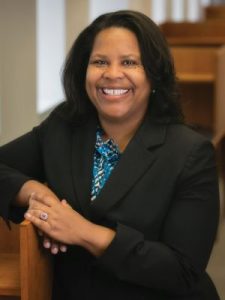
#8 Danielle Conway
Dean and Professor, Penn State Dickinson Law
Conway has led Penn State Dickinson Law since 2019, strengthening the school’s focus on access, innovation and service. She has expanded pipeline programs, deepened the school’s commitment to diversity and inclusion and emphasized law’s role in public interest work and entrepreneurship. Her leadership also prioritizes affordability, technology integration and professional formation, preparing graduates for a changing legal landscape.
A nationally recognized scholar in procurement, intellectual property and government contracting, Conway previously served as dean of University of Maine School of Law and held the Michael J. Marks Distinguished Chair in Business Law at University of Hawai’i at Manoa – William S. Richardson School of Law. In 2025, she served as President-Elect of AALS and will become president at the annual meeting in January 2026.
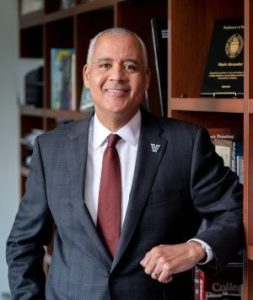
#9 Mark Alexander
Dean, Villanova University Charles Widger School of Law
Alexander is a nationally recognized leader whose influence extends across legal education, scholarship and public service. Since 2016, he has guided Villanova Law through a period of major innovation — expanding experiential learning, deepening global engagement and strengthening access to justice.
Under Alexander’s leadership, the school has launched the Caritas Clemency Clinic, the Intellectual Property Law Clinic and the Health Innovation Lab, while broadening international opportunities through a semester-abroad entrepreneurship program in Cape Town and a new LL.M. in U.S. Law for foreign-trained attorneys.
Alexander also created the Building Bridges series, which promotes civil discourse by bringing together leaders with differing viewpoints to discuss national issues. A constitutional law scholar and past president of the Association of American Law Schools, he helped guide law schools through the pandemic and continues to shape national conversations about academic leadership and inclusion. He also co-edited “Beyond Imagination?,” a collaborative volume by 14 law deans examining the legal and civic lessons of January 6.
Through institution-building, mentorship and scholarship, Alexander has strengthened Villanova Law and helped foster a more engaged and compassionate legal academy.

#10 Paul Caron
Dean and Professor, Pepperdine University Rick J. Caruso School of Law
Caron is one of the most influential figures in legal education and tax scholarship. For more than two decades, his TaxProf Blog served as the field’s most widely read online resource — drawing more than 20 million annual page views and becoming the central hub for news, commentary and community across legal academia. When the blog closed in September 2025 after its hosting platform shut down, the response underscored Caron’s extraordinary influence. Hundreds of professors, deans and students shared tributes crediting the site for shaping national discourse and connecting the academy. The story was covered by outlets including the ABA Journal, Law.com, Reuters and Above the Law. The blog is now hosted by AALS.
Through his scholarship, leadership and digital innovation, he helped define how law schools communicate, collaborate and evolve, leaving a legacy that continues to shape the profession.
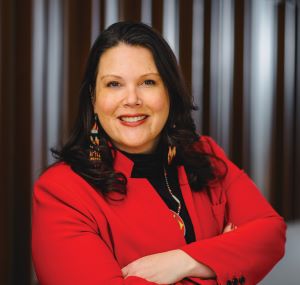
#11 Elizabeth Kronk Warner
Dean, University of Utah S.J. Quinney College of Law
Kronk Warner is a nationally recognized scholar and leader in environmental and Indian law. A citizen of the Sault Ste. Marie Tribe of Chippewa Indians, she has served as an appellate judge for her Tribe and a district judge for the Prairie Band Potawatomi Nation. She has authored or co-authored several books and more than 40 articles and chapters, earning national recognition for both her expertise and teaching.
As dean of University of Utah, Kronk Warner is an influential voice in legal education. She chairs the AALS Deans Steering Committee and the AALS Membership Review Committee, and she co-chaired the 2023 ABA New Deans Workshop. She also serves as a trustee on the Law School Admission Council Board, contributing to its DEI and audit committees, and is an ex officio member of the Utah Bar Commission.
Her leadership reflects a deep commitment to inclusive legal education and to preparing the profession for the challenges ahead.
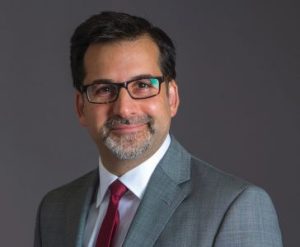
#12 Robert Ahdieh
Dean and Vice President for Professional Schools and Programs, Texas A&M University School of Law
Since his appointment in 2018, Ahdieh has turned Texas A&M Law into one of the fastest-rising institutions in legal education.
He has expanded the faculty with nationally recognized scholars, launched new clinics and experiential programs, and built one of the country’s largest graduate programs for non-lawyer professionals — now serving more than 1,000 students across multiple industries.
Ahdieh’s vision also helped anchor the $350 million Texas A&M–Fort Worth research and innovation campus, positioning the law school as a central force for interdisciplinary collaboration, workforce development and public-private partnerships.
A respected voice in legal education, he continues to shape national discussions on innovation, access and the future of professional training, advancing Texas A&M’s role at the intersection of law, business and technology.

#13 Brian Leiter
Professor and Director, Center for Law, Philosophy and Human Values, The University of Chicago Law School
Leiter is a leading scholar of general jurisprudence, moral and political philosophy and evidence, with a focus on the intersection of law and philosophy. His major works include “Nietzsche on Morality,” “Naturalizing Jurisprudence” and “Why Tolerate Religion?,” along with edited volumes such as “Objectivity in Law and Morals” and “The Oxford Handbook of Continental Philosophy.”
Leiter is also the creator and longtime author of Brian Leiter’s Law School Reports, a widely read blog that shapes national conversations on legal education, philosophy and academic life.
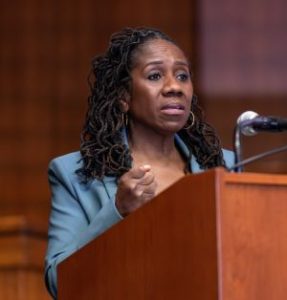
#14 Sherrilyn Ifill
Vernon Jordan Distinguished Professor in Civil Rights, Howard University School of Law
Ifill is one of the nation’s most influential voices on civil rights, democracy and legal education. As the founding director of Howard University’s 14th Amendment Center for Law and Democracy, she has created a powerful platform for scholarship, litigation and public engagement focused on equal protection, due process and democratic participation. The center is already shaping national dialogue and preparing new lawyers to defend constitutional rights.
From 2013 to 2022, Ifill served as president and director-counsel of the NAACP Legal Defense and Educational Fund, guiding the organization through a decade of landmark work on voting rights, policing reform and racial justice. Her leadership restored the LDF’s national prominence at a pivotal time.
A former University of Maryland Francis King Carey School of Law professor, Ifill is also an acclaimed scholar and the author of “On the Courthouse Lawn: Confronting the Legacy of Lynching in the Twenty-First Century.” Her forthcoming book “Is This America?” examines the intersection of race, law and democracy. Honored with the Radcliffe Medal and named to TIME’s list of the 100 Most Influential People, she continues to redefine what courageous, visionary leadership looks like in legal education.

#15 Meera Deo
Chair and Professor, Southwestern Law School; Director, Law School Survey of Student Engagement
Deo is one of the most influential empirical voices in legal education. As director of the Law School Survey of Student Engagement, she has built data systems that shape how law schools measure inclusion, engagement and student success.
Deo’s 2025 report, “Twenty Years of LSSSE: Sharing Trends in Legal Education,” analyzed responses from 86,000 students at 150 schools, offering the most comprehensive portrait to date of how law students learn, connect and thrive.
Deo also co-leads the Survey on the Engagement of Law Faculty and Staff, the first national study examining belonging and professional well-being across legal academia. Together, LSSSE and SELFS provide an evidence-based framework for institutional accountability.
A prolific scholar and award-winning teacher, Deo wrote a book, “Unequal Profession,” which helped redefine the national conversation on race and gender in the legal academy. In 2025 she received the AALS Judith Welch Wegner Award for Empirical Research, recognizing her sustained commitment to turning equity goals into measurable progress. Through her leadership, data has become one of the most effective tools for change in legal education.
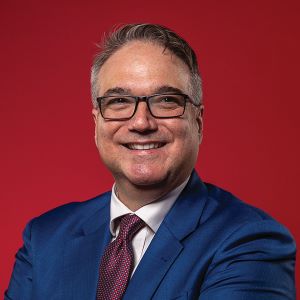
#16 Anthony Varona
Dean and Professor, Seattle University School of Law
Varona has spent nearly three decades advancing access, equity and excellence in legal education. At Seattle U Law, he has led efforts that produced the most diverse and academically strong classes in the school’s history, launched the Technology, Innovation, Law and Ethics (TILE) Institute and expanded the Hybrid Hubs initiative to bring legal education to underserved regions in Alaska and Washington.
A national voice for reform, Varona co-chaired the Washington State Bar Licensure Task Force, helping design a more equitable model for bar admission. He also played a key role in shaping changes to U.S. News & World Report’s law school rankings, advocating for fairer treatment of schools that serve underrepresented students.
The first Latinx dean of any law school in the Pacific Northwest — and the first openly gay and Latinx dean of Seattle U Law — Varona brings a deep personal commitment to inclusion. An immigrant from Cuba and first-generation college graduate, he continues to influence national conversations on diversity, ethics and innovation in legal education.
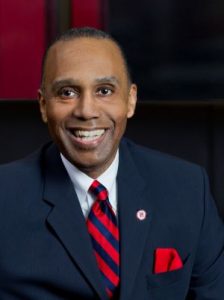
#17 Leonard Baynes
Dean and Professor, University of Houston Law Center
Baynes has reshaped University of Houston Law Center through a decade of growth, higher standards and expanded opportunities for students and faculty. He led a $93 million capital campaign that produced the 180,000-square-foot John M. O’Quinn Law Building, strengthened academic admissions, launched a 3+3 program with UH’s Honors College and began accepting GRE scores. Baynes also created new pipeline programs for first-generation and low-income students, increased faculty development by adding new tenure-track and promotion-eligible lines and deepened alumni and community engagement through global outreach and partnerships with local bar associations. He expanded UHLC’s international footprint as well, building joint programs, global partnerships and a center for U.S.–Mexican Law. Now the longest-serving law dean in Texas, Baynes is the ninth dean of the Law Center and holds the Hugh Roy and Lillie Cranz Cullen Distinguished Chair. A nationally recognized communications law scholar, he became the first dean of African descent in the school’s history when he was appointed in 2014.
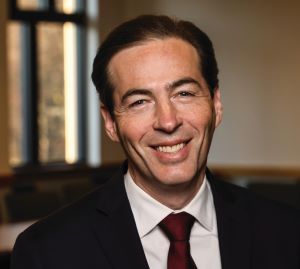
#18 Andrew Perlman
Dean, Suffolk University Law School
Perlman has been a driving force in modernizing legal education, positioning Suffolk Law as a national leader in legal technology and innovation. Since founding the Institute on Law Practice Technology and Innovation in 2013, he has created a durable framework for teaching law in the digital age. Under his leadership, Suffolk Law launched the nation’s first Legal Innovation and Technology concentration and later the first STEM-designated LL.M. in the field.
Perlman was also an early voice on AI’s impact on the profession. His 2022 paper “The Implications of ChatGPT for Legal Services and Society” became one of SSRN’s most downloaded articles and helped spark global discussion about generative AI and the law.
Perlman has continued to lead major collaborations, including a four-school online J.D. consortium and AI-driven access-to-justice initiatives such as CourtFormsOnline.org and Suffolk’s Online Dispute Resolution Innovation Clinic.
A past chair of the ABA Center for Innovation and current member of the ABA Task Force on Law and AI, Perlman remains a central figure in helping legal education and the profession adapt to rapid technological change.
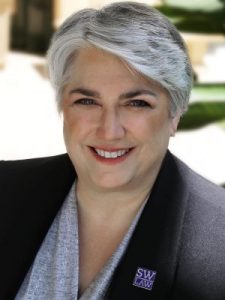
#19 Darby Dickerson
President and Dean, Southwestern Law School
Dickerson is the longest-serving female law dean in the country and a leading national voice for innovation, professionalism and access in legal education. Since joining Southwestern 2021, she has driven major institutional change, including launching the nation’s first primarily asynchronous online J.D. program in full- and part-time formats. She also created new badges in leadership, professionalism and AI literacy, giving students verifiable credentials in emerging areas of practice.
Her influence extends well beyond Southwestern. A former president of the Association of American Law Schools, she has led national efforts to strengthen professional ethics, modernize faculty hiring and reform bar licensure. She played a key role in helping California deans navigate the state’s move to an online bar exam and continues to advocate for fairer systems nationwide.
In 2024–25, Dickerson founded the first fully virtual chapter of the American Inns of Court, which earned a Gold Award in its inaugural year. She now serves as president of Scribes, The American Society of Legal Writers. Widely recognized for her commitment to ethical and structural reform, she remains one of the most influential and trusted leaders in legal academia.

#20 Kevin Washburn
Professor, University of California, Berkeley, School of Law
Washburn has built a distinguished career at the intersection of Indian law, federal policy and legal education. A citizen of the Chickasaw Nation of Oklahoma, he served as assistant secretary for Indian Affairs in the Obama administration, where he helped shape national policy on tribal sovereignty and justice.
Prior to joining the Berkeley Law community, Washburn served as the dean of the University of New Mexico School of Law and the University of Iowa College of Law. He has taught at several leading law schools, authored major case books in gaming and federal Indian law, and written widely on criminal justice in Indian country.
A former chair of the Law School Admission Council Board of Trustees and a member of the AALS Executive Committee, he remains a prominent voice in both legal education and Native American affairs. He was inducted into the Chickasaw Hall of Fame in 2017 for his contributions to law and public service.
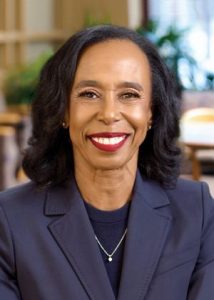
#21 Camille Davidson
President and Dean, Mitchell Hamline School of Law
Since taking office in July 2024, President and Dean Davidson has made an immediate impact at Mitchell Hamline, guiding the school through a year of record growth as it marks its 125th anniversary. Applications rose 25% in one year — and 52% over two years — as she strengthened the school’s reputation for access and academic excellence. Davidson has pushed technology and facility upgrades, expanded experiential learning through new partnerships with businesses and nonprofits and encouraged deeper collaboration across the faculty. A former judicial hearing officer and longtime educator, she has also prioritized alumni engagement, creating new externship, mentorship and professional development pathways nationwide.
The first woman to serve as both president and dean of Mitchell Hamline, she has earned wide recognition for her leadership, including honors from Twin Cities Business Magazine (TCB 100 and Notable Women in Law), Minneapolis/St. Paul Business Journal (Power Shift 25) and Minnesota Lawyer (Top Women in Law). Her work continues to position the school as a national model for innovation and inclusion.

#22 Nikia Gray
Executive Director, National Association for Law Placement
Gray became executive director of the National Association for Law Placement in 2022, bringing a mix of legal practice, leadership and talent management experience to one of the field’s most influential organizations. Before joining NALP, she served as managing partner of Quarles & Brady’s Washington, D.C., office and led the firm’s recruiting and diversity efforts. A litigator by training, her practice focused on intellectual property, data privacy, media and First Amendment law. At NALP, Gray has led the organization through major shifts in the legal hiring market, with an emphasis on data-driven research, equity and professional development. She has championed initiatives to expand access to law firm opportunities, strengthen support for law career professionals and broaden diversity across the legal pipeline.
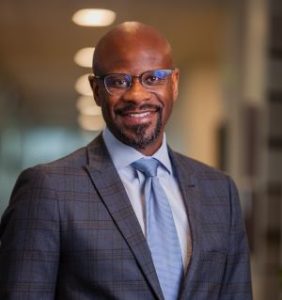
#23 Aaron Taylor
Senior Vice President and Executive Director, AccessLex Center for Legal Education Excellence
Taylor oversees the AccessLex Center for Legal Education Excellence, guiding its research and national initiatives to improve access and outcomes in legal education. He joined AccessLex in 2017 from Saint Louis University School of Law, where he was a professor and previously served as director of the Law School Survey of Student Engagement. Under his leadership, the center launched LexPreLaw and LexPostBacc, two diversity pathway programs designed to support aspiring law students from underrepresented backgrounds. The center also produced the first multi-institutional study examining factors that predict academic and bar exam performance.
Taylor has written extensively on the experiences of underrepresented students pursuing legal education and is a frequent media voice on education and diversity.

#24 Judy Gundersen
President and Chief Executive Officer, National Conference of Bar Examiners
Gundersen leads the National Conference of Bar Examiners at a pivotal moment for legal licensure. Under her direction, the 90-year-old organization conducted a multi-year study of attorney practice that resulted in the NextGen UBE, which launches in July 2026 and will fully replace the current exam by 2028.
She also oversaw the transition to computer-based testing for the Multistate Professional Responsibility Exam and coordinated the first remote bar exam administrations during the pandemic, reflecting her commitment to modernization, accessibility and responsiveness.
Gundersen joined NCBE in 2000 as deputy director of testing and became director of test operations in 2015. Earlier in her career, she served as an assistant district attorney in Madison, Wisconsin. Her focus on transparency, diversity and outreach has strengthened NCBE’s relationships with law schools, bar admissions agencies and the broader licensing community.

#25 Melanie Leslie
Dean and Professor, Benjamin N. Cardozo School of Law, Yeshiva University
Leslie has reshaped Cardozo Law into a national leader in social justice, innovation and inclusion. The first Cardozo Law alumna and the first woman to serve as dean, she has spent the past decade expanding opportunities for students and strengthening equity across legal education. Under her leadership, Cardozo launched the Perlmutter Center for Legal Justice, which works to overturn wrongful convictions, and the Center for Rights and Justice, which supports pro bono advocacy. She also created the Office of Community and Professional Development, Diversity and Inclusion to help graduates develop the cultural competency needed in today’s legal profession.
Leslie has overseen clinics and centers that reflect the breadth of modern practice, including the Death Penalty and Criminal Defense Clinic and The FAME Center.
