

International law is no longer confined to treaties and courtrooms abroad. Across law schools in the United States, the field is becoming more practical, more interdisciplinary and more directly tied to real-world accountability. From technology-driven human rights advocacy to transnational partnerships and war crimes prosecution, schools are giving students hands-on opportunities to engage with global legal challenges as they unfold. The following updates highlight how law schools are expanding international law education through clinics, research collaborations and on-the-ground work.
The following law schools earned a place on our International Law Honor Roll, recognized for the strength of their programs. Following the list, you’ll find the latest developments and news from international law programs at these various law schools.
Top law schools for international law
DePaul University College of Law launched its International Human Rights Law Clinic this fall, offering students intensive, hands-on experience in global human rights advocacy. The clinic engages students in yearlong projects addressing ongoing human rights violations, including legal research, human rights documentation and the drafting of advocacy reports and submissions to international and regional bodies. Students also work closely with partner organizations and practicing attorneys. The clinic’s work centers on accountability for serious human rights violations, with a focus on gender justice, children’s rights and post-conflict justice. A core component is international fieldwork conducted in close partnership with local human rights organizations.
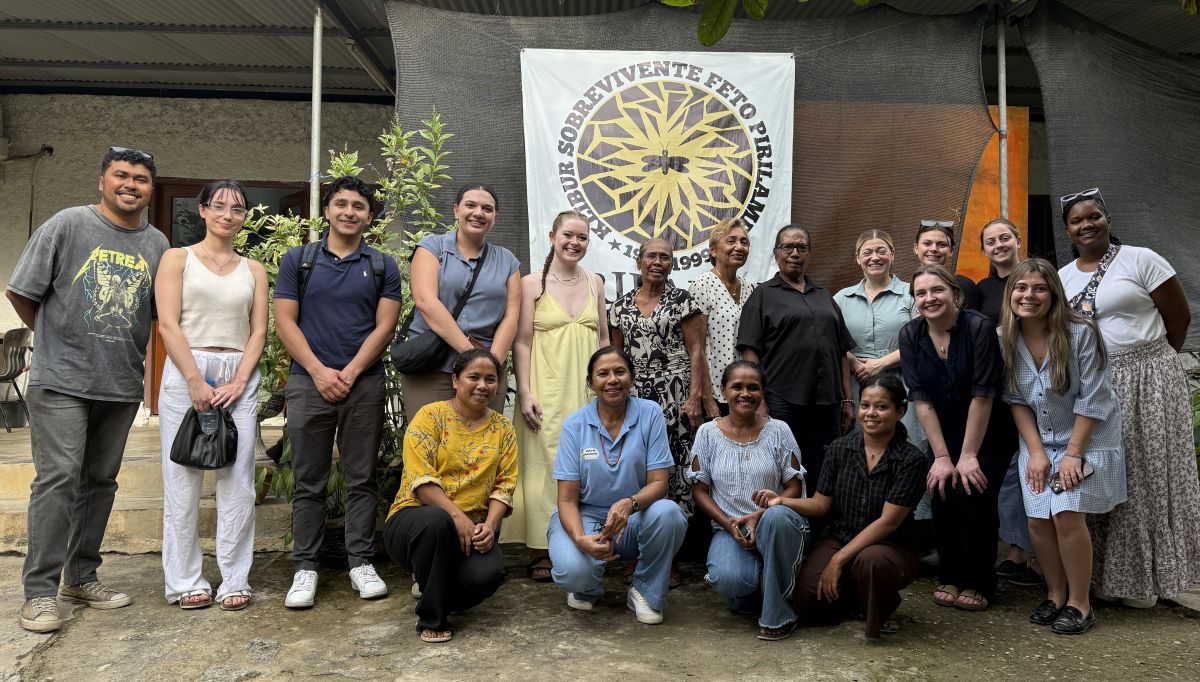
Seattle University School of Law has partnered with multiple universities in Morocco on transnational justice through a jointly taught course for more than a decade. The collaboration recently deepened when Assistant Professor Chryssa Deliganis authored the foreword to a landmark English-language study examining Morocco’s system of land ownership. The book, “Legal Translation in Property Rights Under the Provision of Law No. 14-07,” is designed to support both practitioners and policymakers and was produced by a research team that included Chaima Lamrani Alaoui, a Fulbright scholar who served as a doctoral researcher and guest lecturer at Seattle U Law in 2025.
University of California, Berkeley, School of Law’s Global Rights Innovation Lab Clinic uses data science and digital storytelling to uncover insights, build cases and develop advocacy tools. The clinic equips students with skills for legal practice in a technology-driven landscape. During its inaugural spring semester, GRIL worked with students and stakeholders to explore both the challenges and opportunities of applying emerging technologies to global rights advocacy.
Case Western Reserve University School of Law played a key role in the prosecution of Russian environmental war crimes in Ukraine. Professor Michael Scharf led a team of experts assisting 35 Ukrainian prosecutors and four judges as they prepare cases charging Russian officials with environmental war crimes, including ecocide. Russia has used attacks on the environment as a weapon of war to demoralize the Ukrainian population, while Ukraine is responding through criminal trials targeting military commanders.
Methodology
preLaw magazine grades law schools based on the breadth of their curricular offerings. The scores are figured as follows: 30% for a concentration, 24% for a clinic, 12% for a center, 12% for an externship, 9% for a journal, 8% for a student group, 5% for a certificate and added value for additional offerings.
