

For today’s law students, social justice is no longer a niche interest or a single elective. At a growing number of law schools, it is shaping how students are taught to read cases, understand legal systems and imagine their careers after graduation.
preLaw examined how social justice is embedded across legal education, from classroom instruction and experiential learning to clinics, centers and career support. Using a weighted methodology that considers academic offerings, hands-on training and student body diversity, the Social Justice Honor Roll highlights programs where this focus is a defining part of the law school experience.
This year’s Honor Roll reflects a wide range of institutional approaches. Schools such as Northeastern University School of Law; University of California, Irvine School of Law; Rutgers Law School and University of New Mexico School of Law were recognized for prioritizing experiential learning, public interest pathways and access to the legal profession, while grounding social justice in both curriculum and practice.
For the third year, Howard University School of Law takes the top spot.
Its commitment to social justice is felt from the first semester on, said Tamya Anderson, who describes social justice as a constant presence in her coursework rather than a separate track or specialty.
“It is done in a way that doesn’t feel unnatural or forced but rather highlights the historical traditions that underpin the profession we are going into,” she said. “In Criminal Law, we did a case study on the use of rap lyrics against African American defendants. And in Property, we started the semester with a conversation on early property law and chattel slavery.”
Antonia Izuogu, another Howard University law student, said similar discussions take place across the curriculum.
“Almost all of my professors have taken the time to speak on the racial perspective involved in that particular practice of law,” she said.
When law school students choose to focus on social justice, their decisions shape what they study and influence how they intend to use their law degrees. Students examine how laws, courts and institutions may either decrease or reinforce inequality, who the legal system serves well and who it does not. That perspective often influences course selection, clinical work and long-term career goals.
The following law schools earned a place on our Social Justice Honor Roll. Following the list, you’ll find the developments and news from some of these law schools.
Top law schools for social justice
Howard’s dedication to social justice
Howard University offers 10 clinics focused on social justice, ranging from civil rights and criminal justice to child welfare and fair housing.

Anderson participated in the Civil Rights Clinic, where she studied the legal theories behind a range of civil rights issues while also engaging with their real-world impact.
“The primary work of the Civil Rights Clinic is the drafting of amicus briefs in pending civil rights cases,” Anderson said. “This year the clinic wrote a brief opposing the National Guard occupation of Washington, D.C., on behalf of D.C. faith leaders.”
As a member of the Movement Lawyering Clinic, Izuogu helped organize a reparations case, due to the displacement of 104 of 150 households in a predominantly African American community during the 1960s, 70s and 80s.
“Student attorneys in the clinics work with real people with real problems,” Izuogu said. “Under supervision, students interview clients, conduct legal research, write amicus briefs, represent clients in court and draft and review documents. All these duties help students see the human impact of legal rules and attempt to create positive relief for their clients.”
To ensure social justice is integrated throughout the curriculum, Howard University addresses these issues across experiential learning opportunities, foundational doctrinal courses, seminars and upper-level electives, said Cedric Powell, associate dean of academic affairs. As they build core legal skills for advocacy-focused practice, students study civil rights, human rights, public interest law and systemic inequality.
“This approach reflects Howard University’s historic mission to train lawyers committed to justice, leadership and service,” Powell said.
Even in traditional offerings such as Constitutional Law I and II and Immigration Law, courses examine how legal systems affect marginalized communities. Topics regularly include access to justice, involvement with the criminal legal system, housing discrimination, police misconduct, structural inequality and voting rights.
Through its Clinical Law Center, Howard University also offers live-client clinics and externships that provide hands-on experience in areas such as civil rights, community advocacy, criminal justice, family law, housing and re-entry. Externship students are placed in courts, government agencies, nonprofit organizations and public interest settings, where they work with real clients, including those facing discrimination.
“Students work directly with clients, conducting interviews, drafting pleadings, negotiating, researching and appearing in court under faculty supervision,” said Valerie Schneider, director of the Clinical Law Center. “This allows them to see firsthand how legal rules affect individuals and communities.”

Career preparation reinforces that mission. Through programs such as the J.L. Greene Public Interest Scholars Program, students receive mentorship, professional development and funding support aimed at making public interest careers more accessible and sustainable, said Lauren Jackson, dean of career services. The Office of Career and Professional Development connects students with public interest employers, fellowships and government opportunities.
Howard University partners with Equal Justice Works and the Public Service Recruitment Fair, connecting students with employers committed to social justice.
For additional career preparation, the law school hosts fireside chats with public interest leaders and offers mock interviews. Students also participate in the Howard Law Pro Bono Pledge, committing to serve underserved communities.
Students quickly learn that pro bono service is a professional responsibility, not an extracurricular activity, Jackson said.
“By embedding this commitment early, Howard University signals that public service should remain part of a lawyer’s career, regardless of their practice setting,” she added. “Graduates who enter private practice are well prepared to remain engaged in reform efforts, pro bono representation and community advocacy.”
CUNY Law’s dual mission
At City University of New York School of Law, coursework and training are grounded in a dual mission: expanding access to the legal profession for communities historically excluded from it and educating lawyers dedicated to serving human needs, said Marbré Stahly-Butts, associate professor of law.
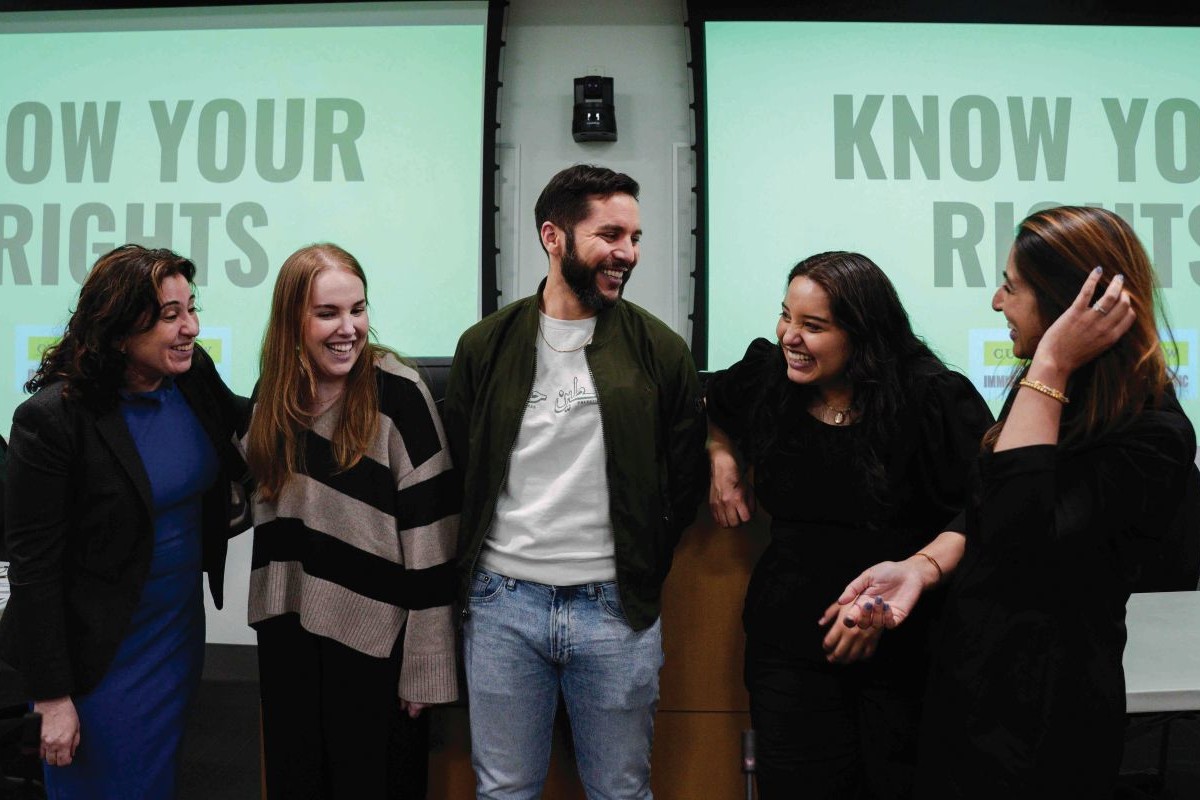
“These two commitments are interrelated and form the foundation of CUNY Law’s identity as a social justice-centered institution,” Stahly-Butts said.
Stahly-Butts said CUNY Law’s commitment to social justice is integrated at every stage of the school’s academic program — from the first year through the final year.
“Every single class at CUNY Law is taught through a lens that examines social justice principles, while interrogating the structures of power at work,” she said.
Beginning in the first semester, students take courses such as Liberty, Equality and Due Process, which approaches constitutional law through the Reconstruction Era, often described as the nation’s second founding and its first sustained experiment with multiracial democracy, she added.
The course is taught from a critical perspective that’s shared across CUNY Law’s faculty, resulting in students’ educations on the liberatory potential of law. They also learn about law’s historical usage as a “tool of surveillance, coercion, violence and exclusion for marginalized communities,” Stahly-Butts said.
“First-year students are also required to take Critical Race Theory, a course that emphasizes the practical application of critical theory and centers questions of power, inequality and the role of lawyers in advancing justice,” she said. “It also highlights how legal advocacy can be used to reduce harm, challenge unjust systems and expand space for community self-determination.”
CUNY Law’s practice-based and experiential learning offerings also emphasize social justice throughout its entire curriculum. For example, during the first year, its Lawyering Program ensures students are introduced to legal practice through simulation-based training. Each of the simulation training offerings are focused on social justice, as students build their core lawyering skills and engage with real-world legal issues. The program sets the stage to benefit from the clinical program.
“The foundation is deepened through the clinical program, where students work under faculty supervision with clients and communities on matters central to public interest and social justice practice,” Stahly-Butts said.
CUNY Law strives to ensure that students from diverse backgrounds — whether economically, educationally, experientially, racially or religiously — can thrive. To do so, its institutional practices and structures have been designed to foster belonging, inclusion and long-term professional success.
For example, CUNY Law offers an integrated Skills Program. Dedicated to social justice, the program focuses on providing instruction in legal analysis, writing and study, beginning with students’ first semester.
“All students, regardless of backgrounds or starting points, have equal access to the core tools of legal thinking and begin with a shared academic footing,” Stahly-Butts added.
SULC offers numerous clinics
Since 1974, Southern University Law Center’s Clinical Legal Education program has offered students — who likely would have been unheard otherwise — access to the courts, said Virginia Listach, director of clinical legal education.
“We proudly meet this justice gap head on,” Listach said. “This, in and of itself, is a bold act of social justice, but our commitment to social justice doesn’t end there.”
To provide a broader range of students with access to the courts, the Clinical Legal Education program has two key focuses: students’ legal education and a dedication to serving underserved communities. Social justice is a primary aspect of the entire program, beginning with students’ first lesson.
Angela Allen-Bell, professor and director of the Louis A. Berry Institute for Civil Rights, Human Rights and Social Justice, said students learn about the consequences of poverty, race, hardships and challenges intersecting in a person’s life. They’re also taught about a necessity to serve marginalized and oppressed people not only when they’re students, but throughout their entire lives.
SULC’s clinics offer legal representation, legal counseling, community outreach and various resources and vary from Bankruptcy, Real Estate and Housing to Tax, Criminal, Disaster Law and Divorce/Domestic Violence.
“All of our services are delivered with the vision and mission of SULC in mind,” Allen-Bell said. “We encourage — and are committed to — public service.”
Due to this commitment, each SULC student is introduced to cultural differences. They also recognize “the inherent worth and value of every person they serve or interact with.” To further introduce students to cultural differences, SULC provides an assortment of externships throughout the United States.
“Through these externships, students gain invaluable experiential learning experiences,” she said. “Students have a chance to make national social justice impacts.”
While participating in clinics and externships, SULC students either serve real clients or provide direct support to those who do, Allen-Bell said.
“By working directly with clients, students see firsthand how legal rules and procedures affect people’s lives,” she said. “These experiences help students understand that the law is not abstract but personal, and that effective advocacy requires hard and soft skills.”
Miami Law’s real-world experience
University of Miami Law School is one of the U.S.’s only law schools with a dean of pro bono and HOPE Public Interest Resource Center. As a result of the center and Miami Law’s Office of Career and Professional Development, students are counseled as they pursue potential public interest careers, which may positively influence social justice.
For example, Miami Law provides public interest career services and public interest career fairs; the fairs bring roughly 40 agencies to the campus each time. The law school also offers public interest-funded job opportunities throughout the summer, as well as hands-on work opportunities during spring and winter breaks.
“Students receive guidance and support to engage in public interest conferences to help them define their career pathways to meaningful and impactful careers,” said Marni Lennon, assistant dean, public interest and pro bono.
Miami Law is also committed to experiential learning, which is central to its mission, said Bernard Perlmutter, director of law clinics.
Through its nine clinics and externship program, Miami Law provides students practical legal experience as they work with government agencies, public interest organizations and the judiciary.
On a yearly basis, roughly 200 students participate in the nine clinics. Every clinic offers students different pathways to legal careers and several opportunities to truly make a difference in the legal industry.
“Under close faculty supervision, students function as the lead lawyer responsible for all aspects of the case, transaction or policy project,” Perlmutter said. “They’ll develop strategy, interview clients and witnesses, negotiate with opposing counsel, conduct trials or arbitrations and draft pleadings, contracts or policy reports.”
“The skills gained in a clinic are transferable to any setting, and the experience is often transformative for students and clients alike,” he added.
Methodology
Schools were scored using a weighted formula that considered academic and experiential offerings, including centers (20%), clinics (20%), journals (10%), courses (20%) and other related programs (10%), based on Social Justice/Public Interest specialty updates. Student body diversity accounted for 20% of the total score and was drawn from ABA J.D. enrollment and ethnicity data.
