
The best law schools for technology law are preparing students for a profession increasingly shaped by artificial intelligence, cybersecurity, data privacy, intellectual property, legal innovation and emerging technologies.
What makes these schools stand out? What trends are driving technology-focused legal education today?
Tal Niv, director of applied innovation and professor at the UC College of the Law, San Francisco, summed it up best by sharing the goal for students incorporating technology into their legal career.
“What we’re after is a graduate who can direct technology in their practice instead of being displaced by it,” she said.
That attitude is present in the curriculums of the schools at the top of our Technology Law Honor Roll and is reflected in the success of the students coming out of their programs.
Technology law is no longer a niche specialty; every practice area is being affected by AI, cybersecurity concerns, data privacy regulation and technology tools.
AI rules the roost
Chief among technology tools is artificial intelligence, whose rapid proliferation has been seen, depending on one’s viewpoint, as either a bellwether for the future state of humanity or a harbinger of something less desirable.
Law schools are taking specific steps to ensure that their students learn the full scope of what AI is capable of so that they can employ it responsibly and know how to respond to it when it shows up in legal cases.
“Teaching [students] to use the tools was never the hard part, or the point,” Niv said. “The point is teaching them to supervise AI-assisted work with a lawyer’s judgment.”
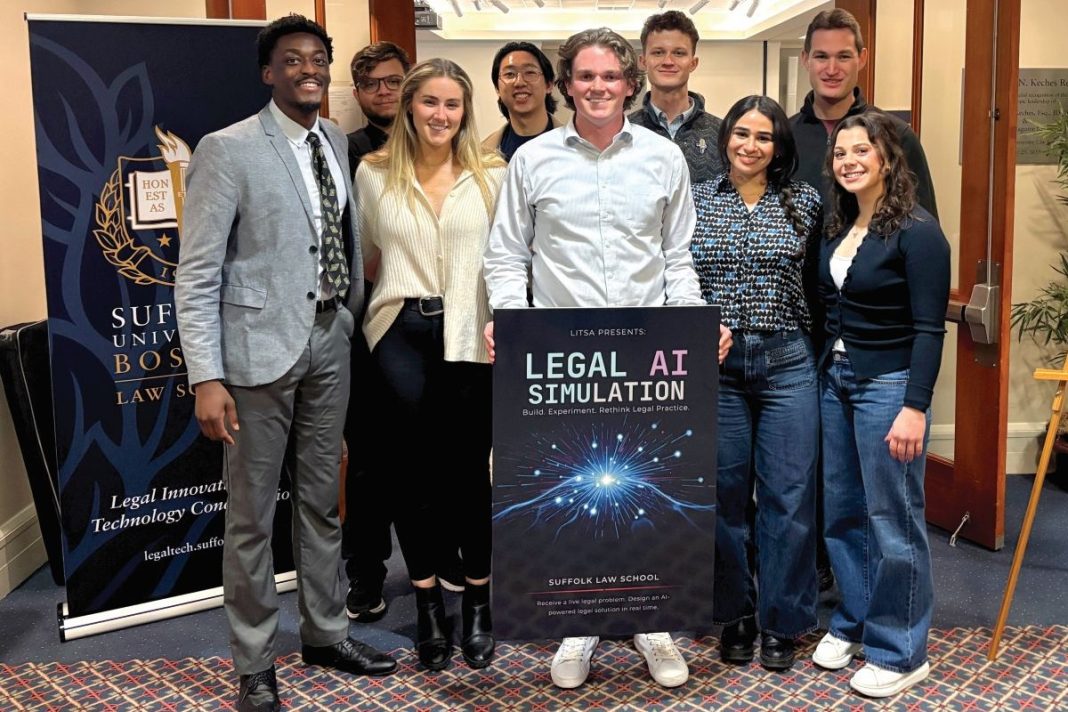
Dyane O’Leary, director of the Legal Innovation & Technology Center at Suffolk University Law School, said all their first-year students completed a learning track about artificial intelligence through Hot Shot Legal, who partners with the school.
“It’s part of the mandatory legal practice skills class in the fall, thinking about what these tools are, how to use them ethically, how to transition their personal world of AI to a more professional one,” O’Leary said. “It’s an interesting transition that we’re not teaching it anew, we’re transforming it through a different lens for them, I hope, in terms of the way lawyers do it.”
Margaret Chon, faculty director of the Technology, Innovation Law, and Ethics (TILE) Institute at Seattle University College of Law, said starting this fall, the school will have an assistant dean for artificial intelligence who will ensure the curriculum through the students’ entire journey exposes them to artificial intelligence in a “building block” manner.
“Students at our school will be exposed to it, but with lots of caveats and with lots of guidelines about responsible use,” Chon said. “I think that’s really in keeping with the E in TILE, which is about ethics. Anytime we use technology, we have to be responsible about it and think about the ethical consequences.”
Wide range of course offerings
Most schools are adding or expanding programs in the face of the rising tide of technology, but some have been at the forefront of the movement for years already.
O’Leary said Suffolk Law has had the Innovation Technology Institute for more than a decade and has been steadily adding to their tech law offerings.
“In some ways, we had kind of an unfair head start,” she said. “We already had eight to 10 innovation technology courses and an innovation technology concentration. Under my leadership in the last 12 to 15 months, we’ve added six new courses.”
One of those courses is an AI regulatory framework class, which tackles international governance issues. In the past year, the school also launched the Online Dispute Resolution Innovation Clinic in partnership with the American Arbitration Association, which is a grant-funded clinic where students design a new online workflow for people to get a low contest or no contest divorce in Massachusetts.
UC Law San Francisco has deepened its Technology Law and Lawyering Concentration by adding three new courses: AI Law, which surveys the legal questions raised by AI development; International AI Governance, which puts students inside the regulatory environment forming across national, international and private borders; and AI and Liability, which takes on one of the areas where AI is creating the most challenging new problems. The concentration pairs the coursework with externships, clinics and mentoring from lawyers who work with technology companies every day.
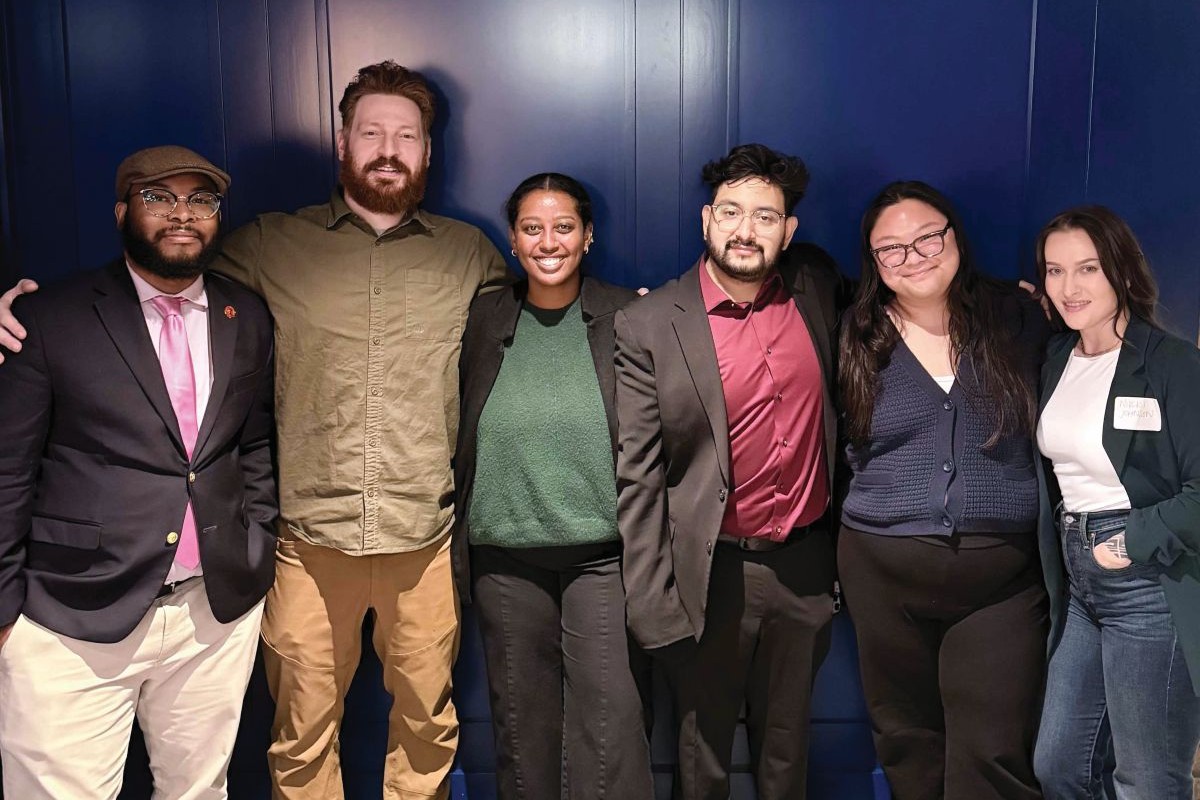
Seattle Law hosted its annual Innovation and Technology Law Conference in June for more than 700 participants with the topic Indigenous Perspectives on AI. It also partnered with Jindal University in India for several programs, including a spring break program focused on AI, and it added a course called Investing in AI Companies: Tech, Business, & Legal Perspectives.
Chon also noted a handful of other new and returning courses bolstering their tech law curriculum.
“We offered Comparative Privacy Law and Survey of the Media Law Landscape for the first time last fall,” she said. “We also offered Advertising Law and Biotech Business Law, both for the first time last spring after a long hiatus.”
Chon said the school is about to offer a Global Privacy Law and Business course again, and next spring, a new course, Transactional Practice in the Age of AI: Dealmaking, Governance, and Strategy, taught by two alumni, will be offered.
Hands-on style for the win
A hands-on approach is the best way for students to learn new concepts and tech.
UC Law San Francisco has a few distinct examples, with its AI-Enabled Lawyers Lab and Startup Legal Garage.
The lab lets students do more than simply read about AI’s effect on the profession from a safe distance. They run AI across real legal workflows, find where it’s strong and where it breaks and build their own tools. This teaches students to design, evaluate and responsibly supervise technology-enabled work, not just generate output.
The Startup Legal Garage runs through the school’s Center for Innovation and approaches the topic from a different angle. The students work under attorney supervision and help early-stage founders with corporate, IP and business law questions.
“Last year, the Garage partnered with 18 startups across health, clean energy and AI,” Niv said. “The program pairs students with attorney mentors from leading firms and has supported hundreds of companies for more than 15 years.”
Chon said Seattle Law offers more than 40 tech-related externships. She noted that the school’s location is a huge boon with its proximity to tech giants such as Microsoft and Amazon, even gaming companies such as Wizards of the Coast, the makers of such games as Dungeons & Dragons and Magic The Gathering.
“The students are exposed to all these different people in the local Seattle community who are able to tell them about their area of practice,” she said. “What makes us unique is our access to that. Other schools might be able to do that by Zoom, but these folks come into the classroom.”
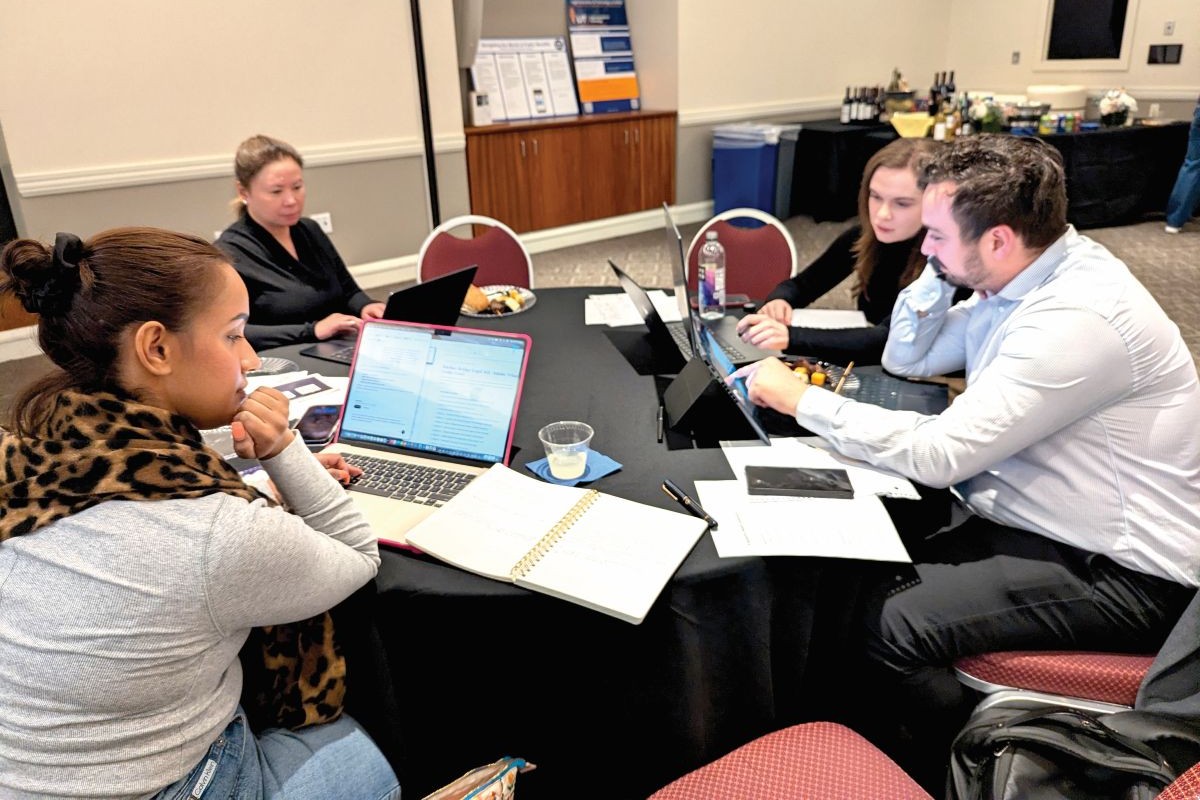
Students at Suffolk Law have the previously mentioned mandatory legal practice skills class in their first year, but the school also offers a legal innovation technology lab as an elective. In conjunction with the Massachusetts Trial Court, the Massachusetts Appeals Court, some tribal entities in Massachusetts and other nonprofits, students build tools, automated forms and solutions for clients.
“For example, one of our students worked on an appeals form that someone could fill out online if their MassHealth prescription coverage got denied,” O’Leary said. “They just get a blanket denial, which is horrible, and if it’s for a prescription they really need, they don’t know what to do. So, [it’s] a simple link to a simple form that creates the appeal form; [we’re] trying to put complicated legal concepts in the hands of people that really need the help.
“That’s been really eye-opening for a lot of students to think what they’re building is some random tiny thing in the legal ecosystem, but then to see its massive impact for someone who really needs that particular help.”
Graduation-ready
In the face of ever-evolving technology, there are still some things a machine can’t do, and schools must be aware of that and continue to teach “soft skills.” O’Leary said employers are looking for human connections in new graduates.
“If AI is going to do a lot of the ‘lower level’ work that an early associate used to do — the document review, basic timelines and outlining and all those things that we know these tools can be really good at — they’re going to be looking for their new lawyers to take the deposition, meet with the client, do the mediation, be on the deal call, and frankly, fast forward a little bit and have to be ready to take on those higher level creative problems,” she said.
O’Leary said AI is one thing, but lawyers need to be able to look a client in the eye.
“Lawyers need to know how to form a relationship, smile and earn trust,” she said. “We’re not doing anyone a service if we can’t produce law students that can do both of those things.”
Niv said that UC Law San Francisco keeps in mind that employers want the fundamentals of sharp analysis, strong research and writing, professionalism, judgment and reliability. What’s different now is the environment those skills have to work in.
“The graduate who stands out isn’t the one who can write a clever prompt,” she said. “It’s the one who can turn AI-assisted work into reliable professional judgment, who knows when a tool fits, when it’s dangerous, what has to be checked, what can never be outsourced and how to be honest with a client, court or supervising partner about the limits of an AI-assisted analysis.
“Employers also care more than ever about cross-functional communication. Technology lawyers work with product teams, engineers, compliance officers and regulators, and they have to translate legal risk into something those teams can act on. That skill isn’t new, but its value has jumped.”
“The more you know going into legal practice the better, because a lot of it is getting information, analytics and metrics organized really efficiently, quickly and accurately for your clients,” Chon said. “We’re not accountants, but it’s sort of the same thing. We still have to do things in a way that will be efficient. I think the pressure is going to continue for law schools to move away from strictly focusing on reading cases, reading statutes and writing papers, and more towards these tech-based types of teaching methods and skills for our students so they graduate with a certain minimal competency.”
The future is new, scary
New, unproven technology is always coming down the pike and often gets adopted by the general populace before it can be fully vetted. How schools are preparing for these constantly moving targets is yet another challenge.
Chon said the biggest challenge for the next five years is figuring out how to teach students the responsible, ethical use of AI and teaching the basics of law so that they get the fundamentals and graduate understanding what they need to know.
“It’s very complex and taking cognitive shortcuts is so, so tempting,” she said. “I honestly don’t see any other challenges. That’s big enough.”
O’Leary said law schools have started to lean into partnerships with external companies such as Anthropic for Claude or Harvey for law school.
“We’re certainly interested in and considering those types of collaborations, but it’s an interesting landscape,” she said. “It reminds me of the Lexis/Westlaw landscape of decades ago, and now every law school has, for the most part, Lexis and Westlaw provided to their students. I wonder if we’re approaching a world where not every student necessarily has those, or if law schools are paying for and rolling out AI-specific platforms for their students.”
Niv said law schools that successfully hit those targets will do more than simply add a few AI electives. Instead, they’ll rebuild legal education around a “double obligation”: helping students become fluent in AI-enabled practice while ensuring they develop independent judgment, analytical discipline, writing, advocacy and ethical grounding separate from any tech tool.
In her view, the future includes AI literacy as a core competency, in-person practice gets more valuable; some assignments will require AI use and documentation, while others will require unaided work so faculty can assess students’ own reasoning.
“Access to justice becomes the real test,” Niv said. “Used one way, AI widens the gap, available only to institutions that can afford the best of it. Used another, it helps ordinary people understand their rights and get help earlier. Law schools have a responsibility to train students to see both futures and to build toward the second. That’s the work we intend to keep leading.”
