
If you’re a law student who enjoys science, technology, business or public policy, you may think you have to choose one path over another.
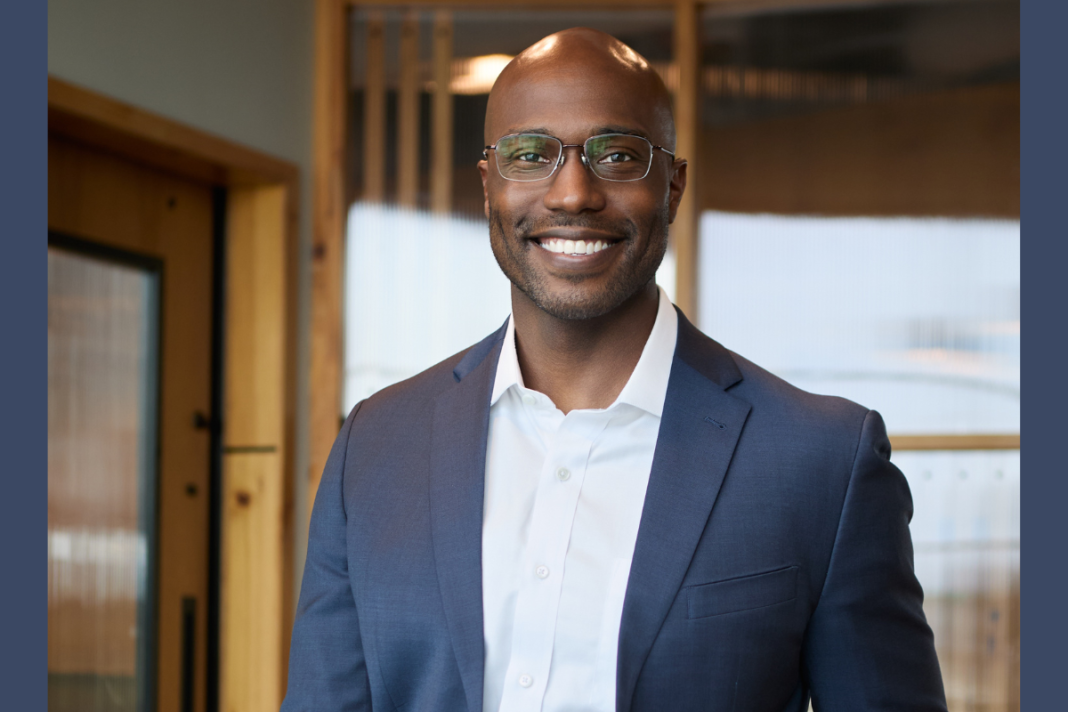
Christian P. Dennis thought that too.
Today, the 2016 Georgia State University College of Law graduate spends his days helping guide legal strategy for a global biopharmaceutical company. His work ranges from contract negotiations and regulatory counseling to business strategy and legal research.
Earlier in his career, he defended physicians and health care organizations in complex litigation while navigating government investigations and administrative proceedings.
It all falls under one umbrella: health law.
For students still exploring practice areas, Dennis says one of the biggest misconceptions is believing health law is limited to hospitals or medical malpractice.
“If a person is interested in M&A, there is a health law subcategory for it,” Dennis said. “If interested in litigation or trial work, there is a health law subcategory for it. Interested in tech? There is a subcategory for it. Bottom line, health care is heavily regulated in the U.S. The result is a practice area that is far broader than most people can imagine.”
That realization shaped his career and may surprise students who have never considered health law.
The perfect career blend
Growing up in College Park, Georgia, Dennis had a wide range of interests. History fascinated him. So did science, technology and business. Law wasn’t always the obvious choice.
“Like many people, I had a few career dreams growing up,” he said. “As I grew older, my interest narrowed in on a career in medicine, tech and business. Then I realized being an attorney could touch on all of my interests and more.”
Reading helped bring that realization into focus.
“The more I read, the more I realized that laws and lawyers tend to play a key role,” Dennis said. “Regardless of the topic, if it has material impact on our society, then there is usually a law or legal concept that must be interpreted, created and sometimes fought over.”
Once he understood how broadly legal training could be applied, he knew law school was the right decision.
Why Georgia State Law stood out
When Dennis visited Georgia State Law, its nationally recognized health law program immediately caught his attention.
The curriculum mattered, but so did something less tangible.
“I remember how the staff treated me, how they interacted with students and how they made us feel,” he said. “I knew there was a culture of focusing on students.”
Like many law students, Dennis questioned whether he had chosen the right profession during school.
“I second guessed my career choice for much of my law school experience,” he said.
The turning point came when classroom learning became real.
“Once I started representing clients and providing strategies that often improved their situation, I knew I picked the right profession,” he said.
What health law looks like
Many students assume health lawyers spend their careers reading medical records or defending doctors in malpractice lawsuits.
Those opportunities certainly exist, but Dennis says they represent only a small piece of the profession.
Health lawyers work with hospitals, pharmaceutical companies, medical device manufacturers, biotechnology firms, insurance companies, health care startups, government agencies and research institutions. They negotiate business deals, advise executives, navigate federal regulations, conduct internal investigations, handle litigation and help companies bring new medical innovations to market.
Dennis discovered that variety almost immediately.
“Early in my career, I learned about surgeries, treatments, diseases and health care delivery without going to medical school,” he said. “I quickly understood that every case and issue would be different and require more learning.”
For students who enjoy intellectual variety, that’s one of the field’s biggest attractions.
“Health law can be complex and require constant learning and curiosity,” Dennis said.
Skills outside the textbook
Dennis began practicing at a trial firm handling medical malpractice defense and long-term care litigation.
Although Georgia State’s health law certificate program provided a strong foundation, he quickly learned that practice required much more than legal knowledge.
He had to understand medicine well enough to communicate with physicians, interpret medical records and explain health care regulations to clients. He had to learn how to communicate differently depending on his audience.
“My discussion with a CNA may be different than my discussion with a surgeon, which may also be different than my discussion with a compliance officer or an executive,” he said.
For students considering health law, communication may be the profession’s most underrated skill.
“Being able to communicate overlapping scientific, business and legal concepts into lay terms is vitally important,” Dennis said.
Learning never stops
Health care evolves constantly. New regulations emerge. Technology changes. Medical advances reshape the industry. Dennis said staying current requires curiosity more than anything else.
“The old adage that reading is fundamental is particularly true for health law,” he said.
That doesn’t necessarily mean reading casebooks. Instead, Dennis follows government guidance, industry alerts and legal blogs while paying close attention to conversations with physicians, business leaders and colleagues.
“When you are trusted, providers, patients and business colleagues will share their perspectives,” he said. “They often share their concerns and experiences, which may point me toward areas that I should confirm or better understand.”
Help those who help others
When Dennis describes his career, he uses a phrase that captures why the work has remained meaningful.
“I often describe my roles as helping those who help others,” he said. “Sometimes that has meant representing physicians; other times it has meant advising health care companies or helping organizations solve difficult regulatory problems.”
Today, as product counsel for a global biopharmaceutical company, he helps legal and business teams navigate complex issues that ultimately support patients around the world.
“There are never dull moments,” he said.
Some of his most rewarding experiences have come long after a case closed.
“Hearing from health care providers years later about how an outcome positively impacted their practice, or seeing the tangible benefits of process improvements has been meaningful,” he said.
Beyond the classroom
Looking back, Dennis believes Georgia State Law gave him more than legal knowledge. There are two skills that continue to shape every decision he makes.
“Discipline and discernment,” he said.
One means developing the discipline to master the details. The other means knowing when clients need the bigger picture.
“Sometimes clients just need the big-picture answer or strategy, and the details can come later,” he said.
He also believes many students underestimate the importance of professionalism.
“The legal industry is a service-based industry,” Dennis said. “How you treat people, how you make people feel and your efforts are just as important as technical skill and measurable impact.”
That mindset has helped him build something he values deeply.
“I have had attorneys and experts give me positive feedback to my partners, and opposing counsel provide professional recommendations that significantly advanced my career. I have also had former clients refer their family and friends to me,” he said. “That level of trust and respect has always meant a great deal to me.”
Advice for students
Dennis encourages students not to think of health law as a narrow specialty. Instead, think of it as a legal framework that intersects nearly every practice area.
“Health law is broad,” he said. “If you have an interest in multiple areas, you may be able to practice in those areas under the health law umbrella.”
He also encourages Georgia State Law students to immerse themselves in every experiential opportunity available.
Clinics, externships, internships and practicum courses all provide valuable exposure to health care organizations, government agencies and practicing attorneys.
“The opportunities are there,” Dennis said. “Students must simply pursue them.”
Outside the classroom, Dennis says one of Georgia State Law’s greatest advantages was its location in the heart of Atlanta, where informal lunches and coffee meetings with practicing lawyers developed into mentorships that continue to shape his career today.
Look beyond your first job
If Dennis could go back and advise himself as a first-year law student, his message would be simple: Practice more.
“Law school is largely about application and repetition,” he said. “Everyone is smart and will learn the key principles.”
He recommends meeting regularly with professors to confirm your understanding and completing as many practice exercises as possible. The more opportunities students have to issue spot, analyze and write, the more prepared they’ll be when real clients replace hypothetical ones.
For students still exploring where they fit within the legal profession, Dennis said to look beyond the stereotypes of health law and consider the possibilities. It’s a field where attorneys can litigate, negotiate business deals, advise executives, work with cutting-edge technology and help solve problems that ultimately affect patients and providers alike.
Along the way, the work offers something else that many lawyers spend an entire career searching for: the chance to keep learning while making a meaningful impact.
“Successful health law attorneys tend to combine flexibility and intellectual curiosity with strong communication and strategic thinking,” Dennis said.
