

A law student at Suffolk University Law School isn’t simply learning how technology is changing the practice of law. The student may be helping build that change.
Students at Suffolk Law have developed digital tools that help people seal eviction records, navigate veterans benefits, communicate with the Social Security Administration and fight foreclosure. Its free online court forms are used by about 38,000 people each year, generating approximately 20,000 court-ready documents. One student-built eviction-sealing tool alone produced more than 3,200 filings in its first year, roughly half of the statewide volume in Massachusetts.
That kind of hands-on problem-solving reflects a broader shift taking place in legal education.
Artificial intelligence is certainly part of it. But the most compelling innovations underway at law schools today extend well beyond teaching students how to use AI. Schools are reconsidering when students begin practicing legal skills, how they gain work experience, how technology is incorporated into the curriculum, who has access to a J.D. and even when a law school’s responsibility for preparing a student to become a lawyer should end.
The 20 schools recognized by preLaw this year illustrate that evolution. Some are putting students to work building technology used by courts and real clients. Others are redesigning the first-year curriculum, integrating full-time legal work into the J.D., creating new pathways for working students or extending academic support through the bar exam.
What connects them is a willingness to question a longstanding assumption of legal education: Does law school have to be done the way it has always been done?
Building the technology of tomorrow
Offering a course on artificial intelligence is no longer particularly innovative. As AI becomes part of legal practice, the schools pushing furthest ahead are moving beyond introducing students to the technology. They are integrating it across the curriculum, using it to rethink how students learn and giving students opportunities to build and apply technology themselves.
Suffolk Law has been doing that since before generative AI entered the mainstream. Its Legal Innovation & Technology Concentration, approved in 2013, was the first of its kind in the country, and its LIT Lab has operated since 2017 as a research and development consultancy through which students create tools for courts, legal aid organizations and self-represented litigants.
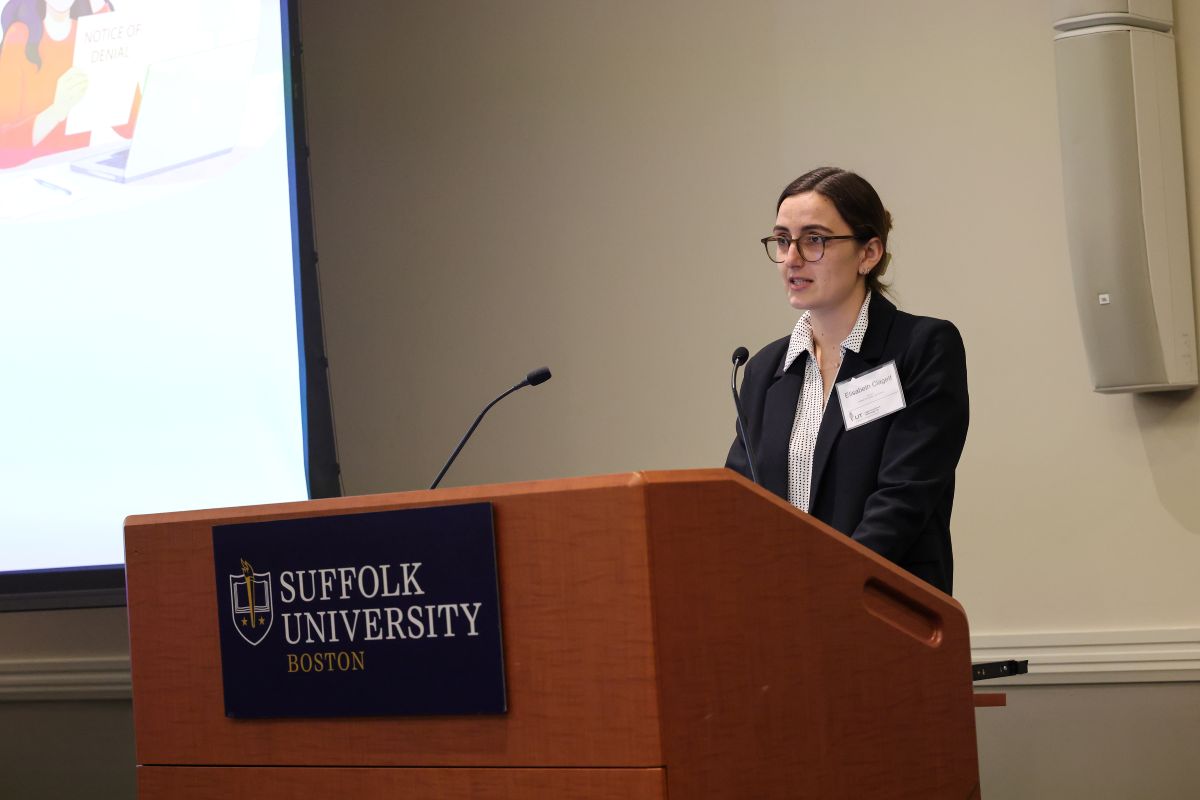
Now Suffolk Law is expanding that foundation into AI. All first-year students complete a required generative AI learning track through their Legal Practice Skills course, while upper-level students can take courses ranging from Artificial Intelligence and the Law to Generative AI & Delivery of Legal Services. Students are also experimenting with the technology themselves. At a student-led Legal AI Innovation Challenge, two first-year evening students built an intake platform incorporating AI-powered fact verification, automated issue spotting and a first-week action plan generator.
North Carolina Central University School of Law has similarly made technology more than a specialty for a small group of students. Its Technology Law & Policy Center has served more than 400 students since 2021, awarded 49 Law & Technology Certificates and helped more than 30 students earn professional certifications in privacy and AI governance. Its AI Governance course was recognized by the American Bar Association as the first at a U.S. law school designed to prepare students for the Artificial Intelligence Governance Professional exam.

The program also connects technology training with public service. Certificate students complete 25 hours of tech-focused pro bono work, while funded summer placements allow students to work in legal aid offices, courts and nonprofit innovation labs. Students have built document-automation tools for wills clinics and worked with Legal Aid of North Carolina’s Innovation Lab on housing automation, AI legal assistance and expunction resources.
At University of Miami School of Law, AI is being used to change how students practice and professors teach. Its Moot Court XR puts students in an immersive virtual courtroom, where AI-powered judges respond to oral arguments in real time. Students can practice repeatedly and receive feedback after each session.
Miami Law’s ClassInsight takes AI into the classroom itself. The system analyzes student engagement and comprehension in real time, providing professors with an anonymized view of students’ understanding of the material while giving individual students personalized feedback. That allows instructors to identify confusion and adjust their teaching while class is still underway.
Students at Sandra Day O’Connor College of Law at Arizona State University will take an even more active role through its new AI and Legal Tech Studio. The studio, which launches its first cohort this fall, combines public service with legal technology entrepreneurship. Students work with partners such as Maricopa County Courts on projects ranging from AI literacy resources to possible automation of routine court processes. They can also develop AI-powered legal applications and explore turning their ideas into businesses.
ASU Law is also developing AI-powered educational tools, including course-specific chatbots built from faculty lectures, transcripts and instructional materials and an AI platform designed to provide individualized support to Online J.D. students.
At University of Illinois Chicago School of Law, students don’t take a traditional final exam in the Access to Justice & Legal Technology course. Instead, they build something. Working with clinics and community organizations, student teams develop functioning chatbots, document-automation tools and web applications for people navigating legal problems without attorneys.
Projects have included a bilingual tool for people facing civil asset forfeiture and technology supporting clients seeking name and gender marker changes.
Syracuse University College of Law is exploring how AI can supplement the professor rather than replace one. Professor Jack Graves created course-specific AI coaches for Evidence and Contracts that rely on curated course materials rather than the broad information available to a generic large language model. Students can ask questions, work through concepts in a Socratic-style dialogue and test their understanding at any time, with immediate feedback.
Finally, Pepperdine University Rick J. Caruso School of Law is approaching AI readiness as an institution-wide responsibility. Its P(AI)R for Lawyering initiative combines practical skills with four guiding principles: ethics, accuracy, compassion and justice. A new Practical AI Skills Credential requires training in responsible AI use, legal and general-purpose AI tools and a capstone in which students teach a practical AI skill back to faculty.
The approach recognizes perhaps the biggest challenge in teaching rapidly changing technology: Today’s tools may not be tomorrow’s. Instead of preparing students to master a particular platform, Pepperdine Caruso Law is emphasizing the judgment needed to evaluate whatever comes next.
Rethinking how law is taught
For generations, much of the first year of law school has centered on reading cases, learning doctrine and developing legal analysis. Practical experience often came later, through clinics, externships or summer jobs.
A number of law schools are challenging that sequence. Their premise is straightforward: Students should begin learning how to act like lawyers earlier.
At University of Minnesota Law School, that starts in the first year with Law in Practice, a required experiential course that has been part of the curriculum since 2013. Rather than waiting until their second or third year to encounter simulated legal work, every first-year J.D. student works through realistic client matters that evolve throughout the course.

Faculty teach alongside practicing attorneys who lead small-group simulations, and the school hires actors to portray clients and witnesses. Students conduct interviews and depositions, counsel clients, negotiate settlements, participate in mediation and chambers conferences and work through transactional matters. Thousands of students have completed the course since it launched.
Minnesota is now applying a similar philosophy to one of the most traditional pieces of the first-year curriculum. Professor Prentiss Cox’s Civil Procedure course reduces the traditional emphasis on reading appellate decisions in favor of problem-solving, simulations and exercises that mirror what lawyers actually do. The goal is not to separate doctrine from practice but to teach students to understand doctrine through its application.
At Northeastern University School of Law, learning through legal work has been embedded in the J.D. for decades. Its Cooperative Legal Education Program dates to 1968 and places students in full-time legal jobs as part of their degree. The scale is significant: Members of the class of 2026 completed 322,000 hours of legal work at 631 co-op placements across 24 states and territories and seven countries.
Students don’t have to wait for co-op to begin working on real problems. Northeastern Law’s required first-year Legal Skills in Social Context course pairs incoming students with nonprofit or government organizations on social justice research projects while they develop core lawyering skills. Over three decades, students have partnered with more than 300 organizations.
That combination changes the traditional progression of legal education. Instead of learning the law first and practicing it later, Northeastern Law repeatedly moves students between the two.
Quinnipiac University School of Law is taking that idea a step further by treating the entire path from orientation through bar admission as one connected educational experience. Its Bridge to Practice program brings together professional identity, career development, experiential education and licensure preparation, areas that traditionally operate separately within law schools.
The three-stage program begins during the first year with professionalism, legal research, career development and academic success. Students then move into clinics, externships and other practice-based opportunities. After graduation, Bridge III provides residential bar preparation, simulated testing, faculty and staff mentoring, dedicated study space and wellness support.
The results offer an early measure of that approach. Quinnipiac Law graduates taking the July 2025 Connecticut bar exam exceeded the statewide first-time pass rate by 7 percentage points, while 90% of the class of 2025 participated in a clinic or externship before graduation.
Purdue Global Law School is redesigning its curriculum around both the skills students will need in practice and those tested on the NextGen bar exam. Rather than leaving individual professors to decide when to incorporate those competencies, the fully online school is mapping AI literacy and seven foundational NextGen lawyering skills across the curriculum, beginning with Contracts, Torts and Introduction to Legal Analysis.
In Contracts, for example, a Socratic AI bot questions first-year students about doctrine and exposes them to the strengths and limitations of AI. In Civil Procedure I, students practice identifying what additional facts they would need before deciding whether to file a motion to dismiss, directly incorporating a skill tested by NextGen into a doctrinal course.
For Jacksonville University College of Law, opening a new law school in 2022 offered an unusual opportunity: It could build a curriculum for today’s profession from the ground up.
Jacksonville Law uses approaches such as flipped classrooms and regularly brings practitioners, judges, government lawyers and other professionals into students’ education. More broadly, it intentionally weaves priorities such as technology competence, professionalism, ethics, skills training and bar readiness throughout the educational experience rather than confining each to a stand-alone course.
Its location in downtown Jacksonville reinforces that approach. Students attend school steps from state and federal courts, surrounded by government offices, businesses, public service organizations and the city’s legal community, bringing the profession within reach of the classroom.
Across these schools, the shift is less about abandoning traditional legal education than changing its timing. Case analysis and doctrine remain essential. But students increasingly don’t have to master them in isolation before learning how lawyers actually use them. The classroom and the practice of law are beginning to meet much earlier.
Learning law by solving real problems
Some of the most valuable legal training begins when there is no answer waiting at the back of a textbook. Students and new lawyers have to confront a client’s problem, an unsettled area of law or a transaction that requires them to decide what to do next.
At University of Massachusetts School of Law Dartmouth, that experience can continue after graduation. Its Justice Bridge Legal Center is a law firm incubator that helps recent graduates establish solo practices serving moderate-income clients who earn too much to qualify for free legal services but may not be able to afford traditional attorney rates.
The model gives new lawyers experience managing clients and handling cases while addressing an access-to-justice gap. Justice Bridge’s 23 incubator attorneys provided some level of legal service to 857 people in 2025, working primarily in family, housing, employment and consumer law across Massachusetts. Rather than treating public service and career development as separate goals, the program is designed to make affordable legal practice financially sustainable for the lawyers providing it.
Students at California Western School of Law encounter similarly concrete problems through its New Media Rights Clinic, where they represent content creators, entrepreneurs and other clients confronting issues involving intellectual property, privacy, media and technology. The clinic has handled more than 2,500 legal matters since joining the law school in 2012.
But client representation is only part of the work. Students create legal guides and educational materials viewed hundreds of thousands of times annually and participate in policy and advocacy involving issues such as net neutrality, copyright reform and artificial intelligence. That means they can move from helping an individual client to considering how the rules governing an emerging field should develop.
At University of California, Berkeley, School of Law, students in the Life Sciences Law & Policy Center work at the intersection of AI, biotechnology and bioethics, often on questions that have yet to be settled. Participants in a new student fellows program write for publication on issues ranging from algorithmic bias in telemedicine to health data privacy and AI-enabled medical devices.
The center’s new LSLP Forum is designed to publish student analysis while legal developments are still unfolding, giving students experience writing for practicing attorneys, policymakers and reporters rather than solely for an academic audience. Nearly 20 life sciences and health law courses further connect students with emerging issues, several taught by practicing attorneys and in-house counsel.
Florida State University College of Law also emphasizes learning while the law itself is developing. Through its Institute of Law, Technology & Innovation and Stoops Center for Law and Business, students interact with practitioners, policymakers, business leaders and government officials confronting emerging questions involving AI, privacy, cybersecurity and other technologies. Its intensive AI and the Law seminar, for example, relies on current developments and practical applications rather than a traditional casebook because precedent and regulation are still evolving.
At Lewis & Clark Law School, the Center for Business Law and Leadership puts students alongside the lawyers making business decisions. Students have worked with Nike attorneys on live small-business clinic matters, practiced structuring and negotiating technology deals with Intel attorneys and participated in contract negotiations led by ZoomInfo’s legal team.
The settings differ, but the lesson is similar: Learning to think like a lawyer becomes more meaningful when students also have to decide, advise, negotiate, write or solve a problem like one.
Opening new pathways to becoming a lawyer
Innovation in legal education means more than changing what students learn. It includes reconsidering who can become a lawyer and what support helps them get there.
At Western State College of Law at Westcliff University, that means extending academic support from the first year through the bar exam. Its Academic Success & Bar Preparation Program uses individualized diagnostic assessments to identify gaps in legal writing, analysis and multiple-choice skills, with one-on-one faculty coaching and support for students beyond those on academic probation. Graduates who need to retake the bar also receive an assigned faculty mentor.
The results have been significant. Western State’s first-time July bar passage rate increased from 47.8% in 2022 to 82% in 2025, with gains each year.
Touro University Jacob D. Fuchsberg Law Center is addressing a different barrier: time. Its FlexTime J.D. Program requires students to attend in person only on Sundays, with the remainder of coursework completed asynchronously during the week. Designed for students whose careers, families or other responsibilities make traditional programs difficult, FlexTime launched on Long Island in 2018 and expanded to New York City in 2024. Students still have access to law review, clinics, externships and other parts of the law school experience.
At Nova Southeastern University Shepard Broad College of Law, access takes several forms. The school offers legal education at multiple levels, including a bachelor’s degree in law, a J.D., four Master of Science in Law degrees and a paralegal certificate. Its undergraduate program also offers a 30-credit minor in law, science and technology that allows students in fields such as medicine, engineering and business to incorporate legal and regulatory training into their education.
These programs broaden innovation in legal education. Technology may be transforming legal practice, but flexibility, access, licensure and student success remain core challenges for law schools.
The strongest examples of innovation in legal education come from schools that are looking beyond the present. By anticipating the profession’s evolving demands, they are reimagining how law school can prepare students not just to enter the field, but to succeed in it for years to come.
