
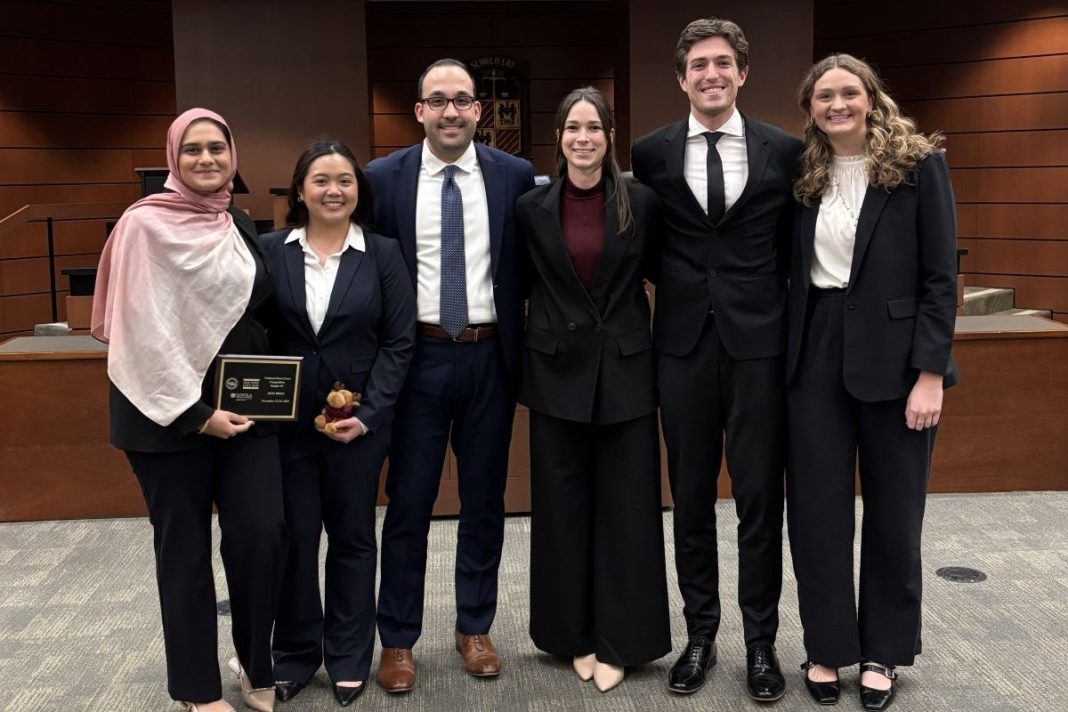
Gaby Rivera, a 2026 graduate of Loyola University Chicago School of Law, said moot court helped sharpen her legal writing, strengthen her ability to think on her feet and build examples she can draw on in job interviews.
“Moot gave me the chance to refine my skills and get comfortable with writing appellate briefs, which translated into my ability to draft other court filings,” she said. “Even now, when I’m studying for the bar exam, I feel at home with the essay writing, which is totally different than my experience writing for the LSAT.”
Rivera’s experience reflects why moot court remains one of the most respected experiential learning opportunities in legal education and why schools continue to invest heavily in advocacy programs.
Moot court is about consistency, coaching and preparing students for real-world legal practice.
Consistency wins
“It’s always about consistency,” said Adrienne Mebane, director of the Dan K. Webb Center for Advocacy at Loyola Chicago. “We have coaches who have been there for some time. We have a director of the moot court program who’s been there for about 12 years, so that consistency for the students is great.”
Mebane said that both the outgoing and incoming moot court boards — composed of students — are responsible for tryouts and end up putting together a team of about 60 students.
Robert Sherwin, Champions in Advocacy Endowed Professor of Law at Texas Tech Law, said that since 2010, they’ve consistently been a top-ranked school, and 2024-2025 was more of an anomaly.
“Our success this year wasn’t a result of a change but rather a return to the consistent results we’ve enjoyed over the past 18 years,” he said.
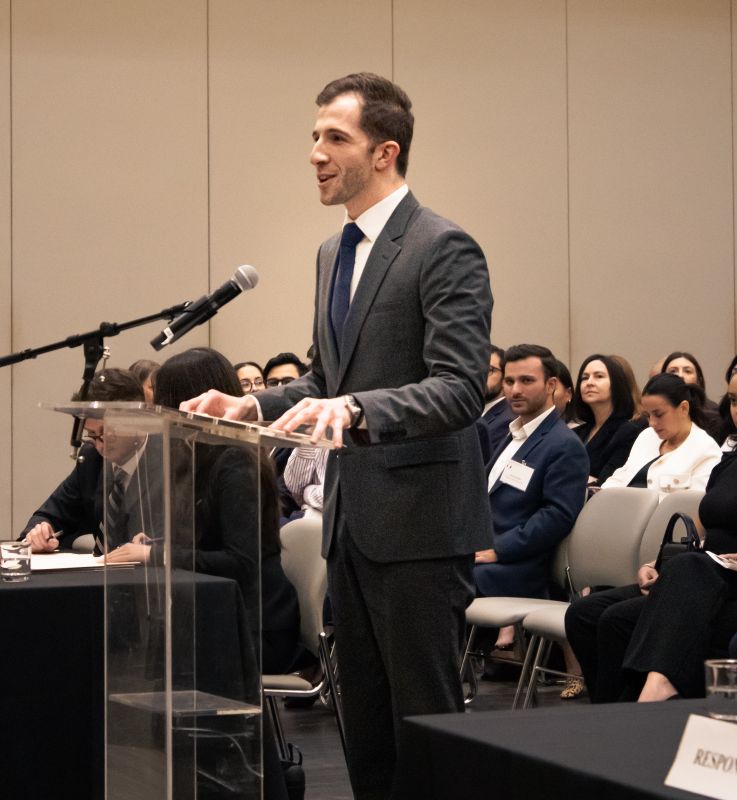
Farah Barquero, director of law reviews and moot court programs at Miami Law, said that this year’s team was composed of students who were 1Ls two years ago when Miami also took third place.
“The team’s energy was completely different this year,” she said. “The dedication and the team’s energy are like they wanted to go back to that, to the top ranking.”
Barquero said that they knew they had a well-oiled machine, but like any machine, it needed a few tweaks to run at optimal efficiency. They knew where their faults were and knew what deficits needed to be shored up. One of their biggest advantages is using alumni to educate the team.
“Our teams are coached by alumni, their previous competitors or alumni that have been established for a couple of years,” she said. “That’s where our difference is: The coach that goes to the competition is usually the same one every year.”
Mebane echoed a similar sentiment about Loyola Chicago’s program.
“The program that we run brings in guest lecturers who are all alumni,” she said. “Some of them are former moot court students, but they all come in and talk about either moot court or the practice of law, what they do, how they do it or the benefit that the program had for them in terms of their experience, in terms of their work. I think that that’s a brilliant way to keep that alumni network connection going with the students.”
Writing matters
One of the biggest misconceptions students have about participating in moot court is that it’s all about the oral presentations, but that is only half of the equation. Both Barquero and Mebane agreed that any students interested in moot court need to be aware that brief writing is just as important.
“When they’re in law, they know that it’s all about writing,” Barquero said. “They think moot court is all about oral advocacy, but there’s always a brief component. There’s a writing component, and you need to learn both, otherwise you’re not going to be able to be successful in moot court.”
Mebane said that one of the biggest factors in their top placement this year was the vast improvement to the students’ writing. Two years ago, the school’s writing program was internalized, which led to more writing courses being added to the curriculum, with four legal writing instructors teaching appellate legal writing to a maximum of 10 students each.
“You can’t write appellate briefs if you’ve never learned the foundations of writing an appellate brief, so we took that on internally,” she said. “This year our brief writing improved dramatically.”
Barquero noted that the system they’ve built at Miami Law is designed to help the students beyond law school, to prepare them for their actual careers, and if that also brings success in moot court competitions, all the better.
“What we care about is for them to be better advocates from when they started the program and then of course be the best advocate they can when they leave the program,” she said. “If we win the competition, wonderful, great. That’s the cherry on top of the ice cream. But we are not ranking driven. We are more of the whole educational process driven.”
Real-world prep
Sherwin said that the theory Texas Tech Law follows is that if they prepare their students for actual practice, competition success will naturally follow.
“There may be a few instances where we alter a strategy specifically for a competition, but that’s the exception,” he said. “We don’t run a program where we try to mold every student to a specific style. Instead, we try to identify every student’s specific strengths and weaknesses and then foster those strengths so the student’s true voice comes out.”
Moot court is valued so highly because of that real-world preparation.
“When people go into law firms and they’re first-year associates, the bosses want people who can pick up a file, go to their office and work it without a lot of oversight from the boss,” Mebane said. “And that’s what these students can do.”
Rivera, operations director for the moot court program at Loyola Chicago, said she’s had interviewers ask about moot court in every interview she’s done.
“It’s an easy way to get the conversation going because you can chat about the competition problem you’re working through or one that people in the program are working on in their competitions,” she said. “Additionally, I’ve had interviews where I’ve been able to tell stories about a time I was challenged and what I did to solve the issue because of my experiences on moot. Because of my moot training, I felt comfortable thinking on my feet.”
Sherwin noted that when employers come to him looking for students, the skills they’re most often asking about are writing, researching and overall legal analyses, which is firmly under moot court’s purview.
“The other thing that matters is a general sense of practice-readiness,” he said. “The students with heavy moot court experience and success are ready to go into the courtroom immediately and argue motions and hearings whereas students without that experience need a few years of observation before they have the comfort level to appear on behalf of real clients.”
