
Teaching my LEALS course in China changed my career, and life, in December 2015. That course helped me think more intentionally about what U.S. law schools do (and could do better) to prepare and support foreign-educated law students who want to and do study in U.S. law schools. LEALS has turned 10 and I’ll soon teach my 30th LEALS course.
During my online Summer 2025 LEALS course for East China University of Political Science and Law (ECUPL), I learned that one of my students would be attending Fordham University School of Law the next semester. We met on Fordham’s campus as she was settling into her Fordham Law experience, and I was preparing to return to Shanghai for the first time since 2018.
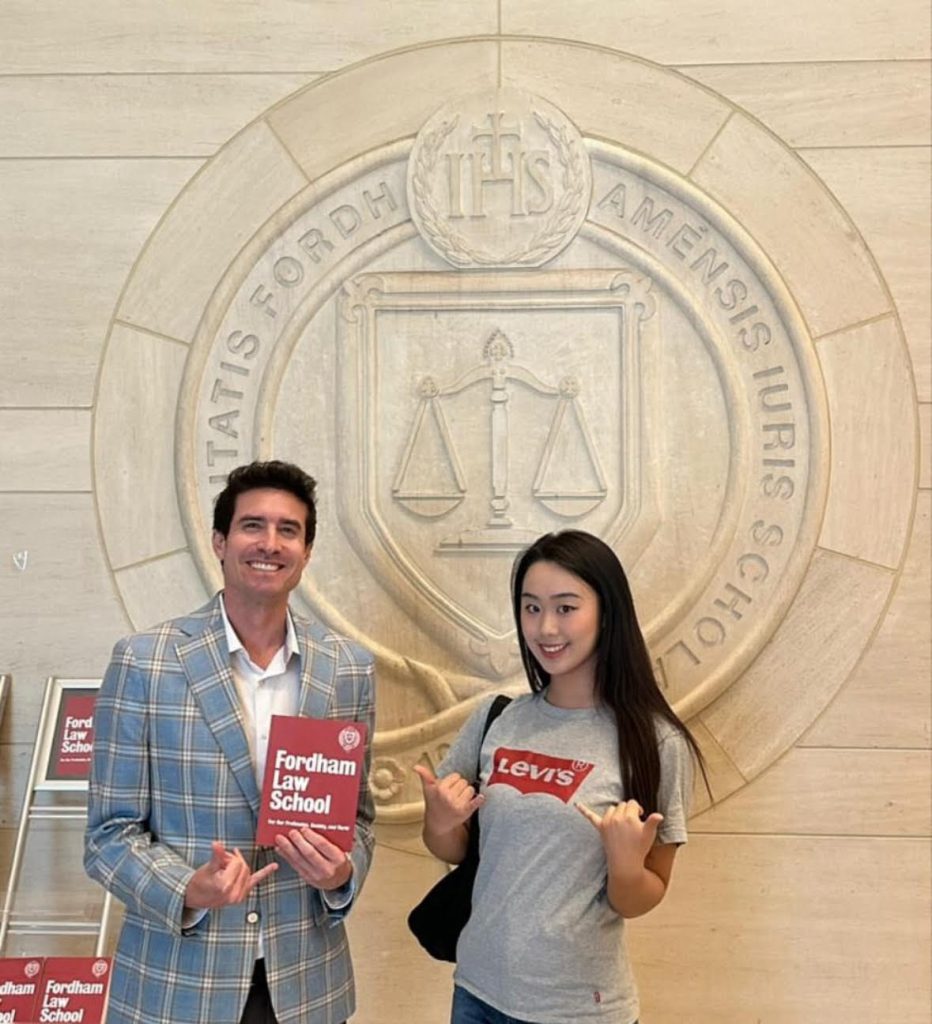
That visit also gave me an excuse to meet Anthony Agolia, senior director of international and non-J.D. programs at Fordham Law. Given our similar backgrounds and careers (and Fordham Law’s connection with ECUPL), it turned out to be a memorable visit. Seeing a LEALSer integrate so well into life overseas and getting to introduce a LEALSer to a U.S. law school colleague were great highlights.
In addition to my work in U.S. law schools and with LEALSers, I’ve enjoyed sharing insights and helping The National Jurist readers learn about the things my students find out through me. Whether that’s the differences between LL.M.s and J.D.s, applying to and choosing a U.S. law school, what to know about bar exams, working in the U.S., participating in an exchange or a number of other topics.
Four years ago, we spoke about the information gap for foreign-educated LL.M. prospects in my interview before starting work as a contributor. One year turned into four. And thanks to the amazing people in the LL.M. 3.0 Series and so many others over the past four years, we are collectively working to help foreign-educated lawyers and law students make more educated and informed decisions, which I truly believe leads to happier students with even better experiences. I’ve seen that firsthand with LEALSers and so many others.
As we close the LL.M. 3.0 series (and my time as a contributor), my last interview builds on my visit to Fordham Law last summer with Anthony Agolia and seeing a LEALSer transition from our class to a U.S. law school experience and now LL.M. graduate.
It focuses on a key theme I’ve covered throughout my career: LL.M. programs are not just “international students in the back of J.D. classes.” This interview highlights some of the many things Fordham Law does to enhance the experience for foreign-educated LL.M. students. And I hope leaves inspiration for LL.M. students, LL.M. prospects, LL.M. alumni and LL.M. programs on what we can all do to continue to raise the bar in an LL.M. 3.0 world.
Thank you!
Meeting the moment with Anthony Agolia
As residential LL.M.s look to maximize the in-person experience every day, how has the Fordham team doubled down on your NYC location?
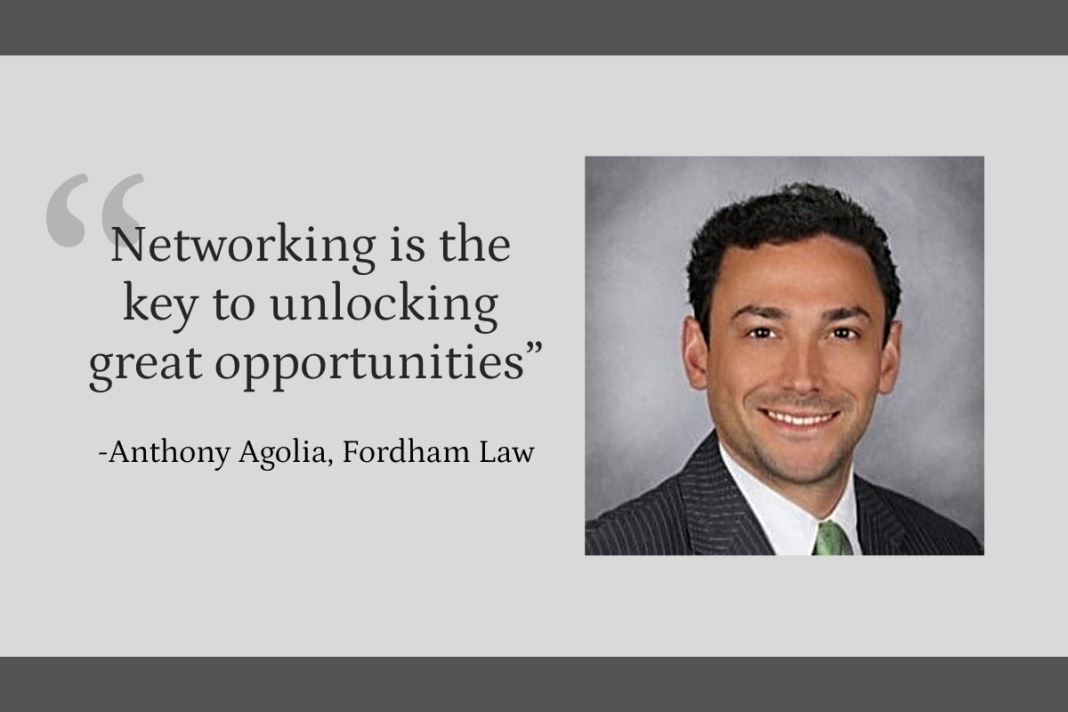
Fordham’s motto is that New York is our campus, and in the LL.M. world, where networking is the key to unlocking great opportunities, it is the centerpiece of the international student experience. When students arrive at Fordham Law, they are stepping directly into the world’s most consequential and dynamic legal market, alongside academic programming that ensures they actively engage with this ecosystem from day one.
The most visible expression of this philosophy is our Graduate Externship Program. We place our LL.M. and M.S.L. students with elite non-profits, corporate legal departments, government regulators and prominent law firms across Manhattan — organizations that are uniquely accessible because of our geographical footprint.
I can think of two recent examples that perfectly highlight the breadth of this marketplace immersion. First, this summer, international LL.M. student Haja Bundu — concentrating in Banking, Corporate and Finance Law — is externing at White & Case LLP’s global headquarters in Midtown Manhattan. The placement is giving her direct exposure to how legal research, writing and analysis function in practice at one of the world’s largest firms, alongside the kind of professional and interpersonal skill-building that simply can’t be replicated in a classroom.
Second, in the spring 2026 semester, we placed Giulia Tacchini, a student in our trailblazing Fashion Law LL.M. program, within the global legal department of Tapestry, Inc. (the New York-based luxury retail conglomerate behind iconic heritage brands like Coach and Kate Spade). Working directly under their in-house counsel, Giulia engaged in high-level intellectual property portfolio maintenance, brand protection and drafting commercial retail and production agreements — directly bridging the gap between specialized fashion law theory and corporate legal reality. These placements offer a level of institutional and corporate exposure that is uniquely available due to our Manhattan footprint.
Our alumni network (over 185,000 worldwide) is woven into the fabric of New York’s legal, financial, corporate compliance and tech sectors — giving residential students a professional network that pays immediate dividends. And students who choose to return to their home countries to practice after graduating can tap into our 19 international alumni chapters across Asia, Europe, the Middle East and South America when they get there.
We recently leveraged this strong local alumni network to launch a highly successful, in-person Alumni Cocktail Reunion on the final day of LL.M. orientation. This ensures that our local and visiting global alumni can maintain close institutional ties with each other while being physically present to network with, mentor and greet our incoming residential class every single year.
Lastly, our location allows our Career Planning Center to organize events that connect our students directly with corporate recruiters and senior alumni executives at global industry leaders like Bloomberg, Citi, Christian Dior and Revlon.
In what ways has the Fordham LL.M. program evolved over the past 5 years? We know F-1 residential LL.M.s are looking for more resources and ways to maximize their experiences. And so how has Fordham leaned into that?
Four major evolutionary shifts stand out for us.
First: In response to the Skills and Values Requirement introduced by the New York Court of Appeals — which took effect for LL.M. students in 2018 — we developed a rigorous Pathway 1 bar admission curriculum featuring five new credits of experiential coursework. The foundation is Fundamental Lawyering Skills, a dedicated 3-credit course. For the remaining two EXP credits, we created 10 new LL.M.-only experiential courses, one tailored to each of our 10 LL.M. concentrations — hands-on courses designed to build the kind of practical skills that employers, and the Court of Appeals itself, have told us they value most in new associates.
Second: We also launched “Perspectives in U.S. Law,” a one-of-a-kind, dedicated bar-preparation course taught by expert practitioners such as Lidio Duval and Martin Pereyra. Very few law schools offer a bespoke bar-prep vehicle of this caliber directly within the LL.M. curriculum, making it an immense competitive advantage for our graduates.
Third: I’m piloting a new version of the Law Practice Seminar for Graduate Students (for our LL.M. externship program), and we’ve redesigned the curriculum to focus heavily on mindset and dispositions: grit, growth mindset and self-awareness about cognitive bias. Recent research suggests these qualities are among the most powerful predictors of success as a practitioner, even more so than cognitive ability or academic pedigree. It’s not just about substantive law — it’s about soft skills firms really value: communication, resilience, grit, a positive outlook and coachability.
Fourth: We have made a serious institutional commitment to cutting-edge tech and AI literacy. The legal profession is being aggressively reshaped by generative AI, and it is our job to prepare students to engage with it critically and competently. Last fall, Fordham Law made national news when Reuters covered our orientation programming, which challenges incoming students to critically dissect AI-generated legal analysis for accuracy, nuance and structural flaws.
How have your partnerships thrived in a post-pandemic world? Did Fordham’s LL.M. team take lessons from when we were virtual and hybrid to enhance those partnerships with schools, alumni and organizations?
The pandemic forced us to figure out how to provide high-quality virtual and hybrid programming — things we’re glad we know how to do now.
Long before registration even begins, we host highly targeted pre-admissions and pre-registration info sessions via Zoom that are co-hosted by our global LL.M. alumni. Throughout the year, we host a series of virtual alumni-focused events, such as specialized career panels mapping out practice-area strategies (e.g., searching for work in litigation vs. transactional practices) and virtual orientation meet-and-greets with alumni.
We have also deepened our physical, in-person institutional relationships. We maintain five elite double-degree exchange programs across China, France, Italy and Spain — through which students spend a year at a partner institution and graduate with dual degrees. This network of exchange partnerships survived the remote era and emerged stronger because we learned how to layer constant, virtual engagement over long-term institutional commitments.
As we think about the future of F-1 residential LL.M. programs in the U.S., especially looking ahead to 2026-27, what are you and the Fordham team hearing from incoming students and prospects?
Three primary trends are shaping the conversations we’re having with prospective international students right now.
First: a shift in bar exam inquiries. Students are now asking about the mechanics of bar eligibility and content-outline requirements earlier in the recruitment process than they did five years ago — often before they ask about specific course descriptions or concentrations. Our Pathway 1 curriculum across all 10 LL.M. concentrations, along with our specialized bar courses, appeals to students who have done their homework and are looking for strong support in the bar eligibility process.
Second: increased demand for support with the student visa process and flexibility about arrival times due to visa delays. Prospective F-1 students are asking detailed questions about the student visa process. Fordham’s Office for International Services actively monitors evolving immigration rules and provides personalized guidance, so our international students aren’t navigating regulatory shifts alone.
Third: demand for a legal education that reflects current technological realities. Incoming students — particularly those arriving from competitive global legal markets where automated document review and AI tools are already standard practice — want to know that their U.S. education prepares them for a profession that looks different than it did even three years ago. We’ve made this a baseline expectation: every residential graduate leaves Fordham with the framework to use these tools effectively, evaluate their outputs and understand where they fall short.
